Contract PCBA manufacturing · Penang, Malaysia
Contract PCBA Manufacturing, From Bare Board to Tested Assembly
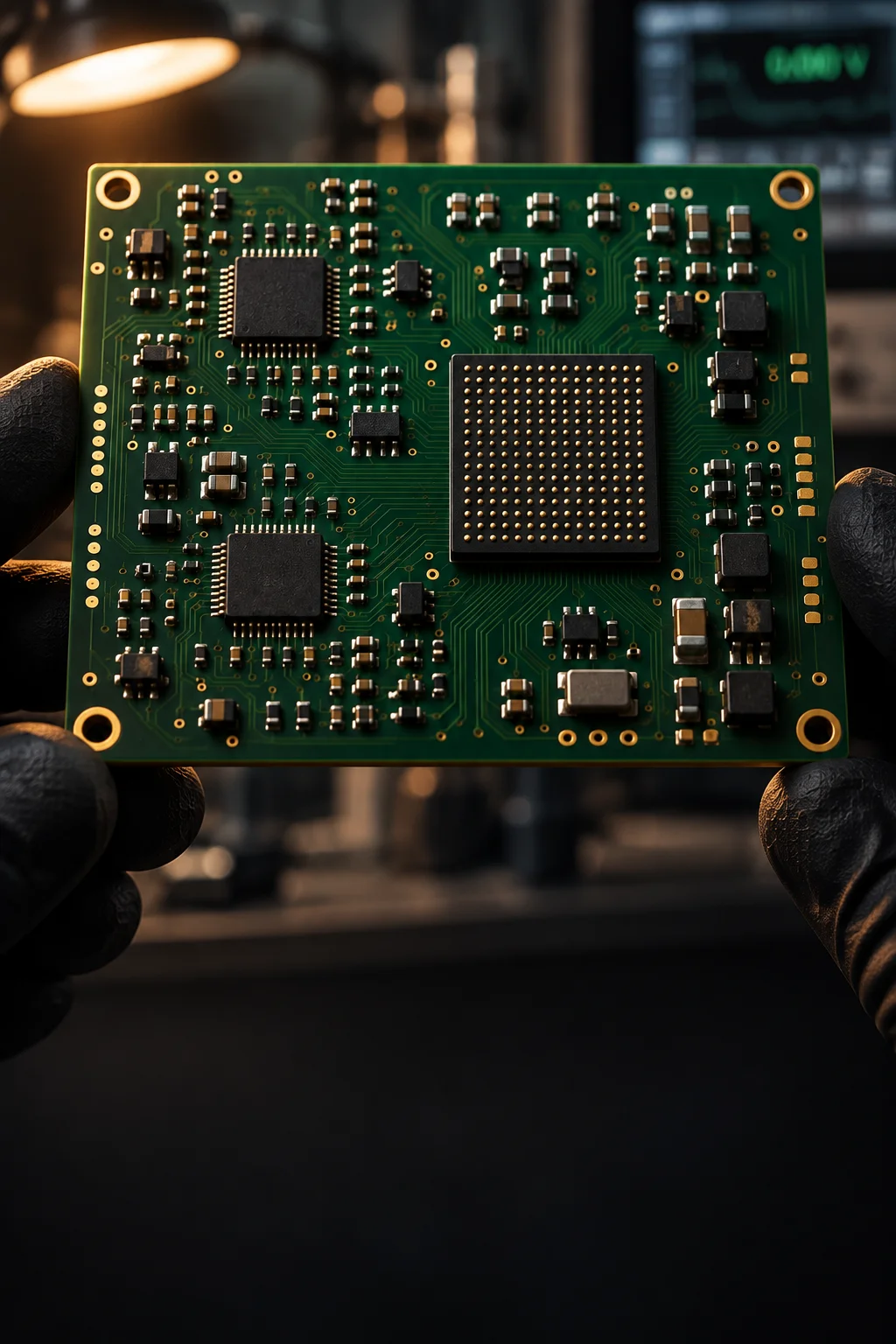
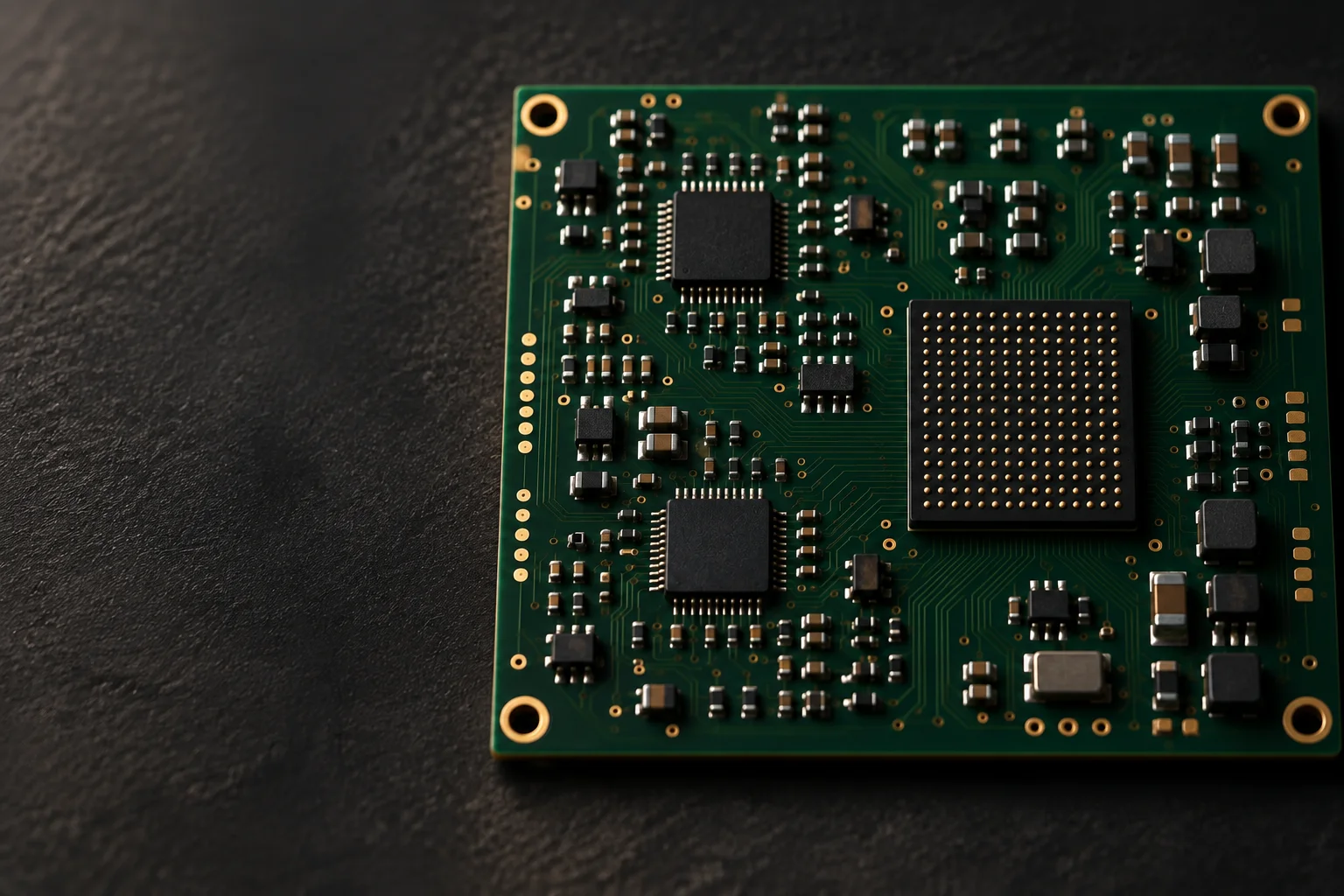
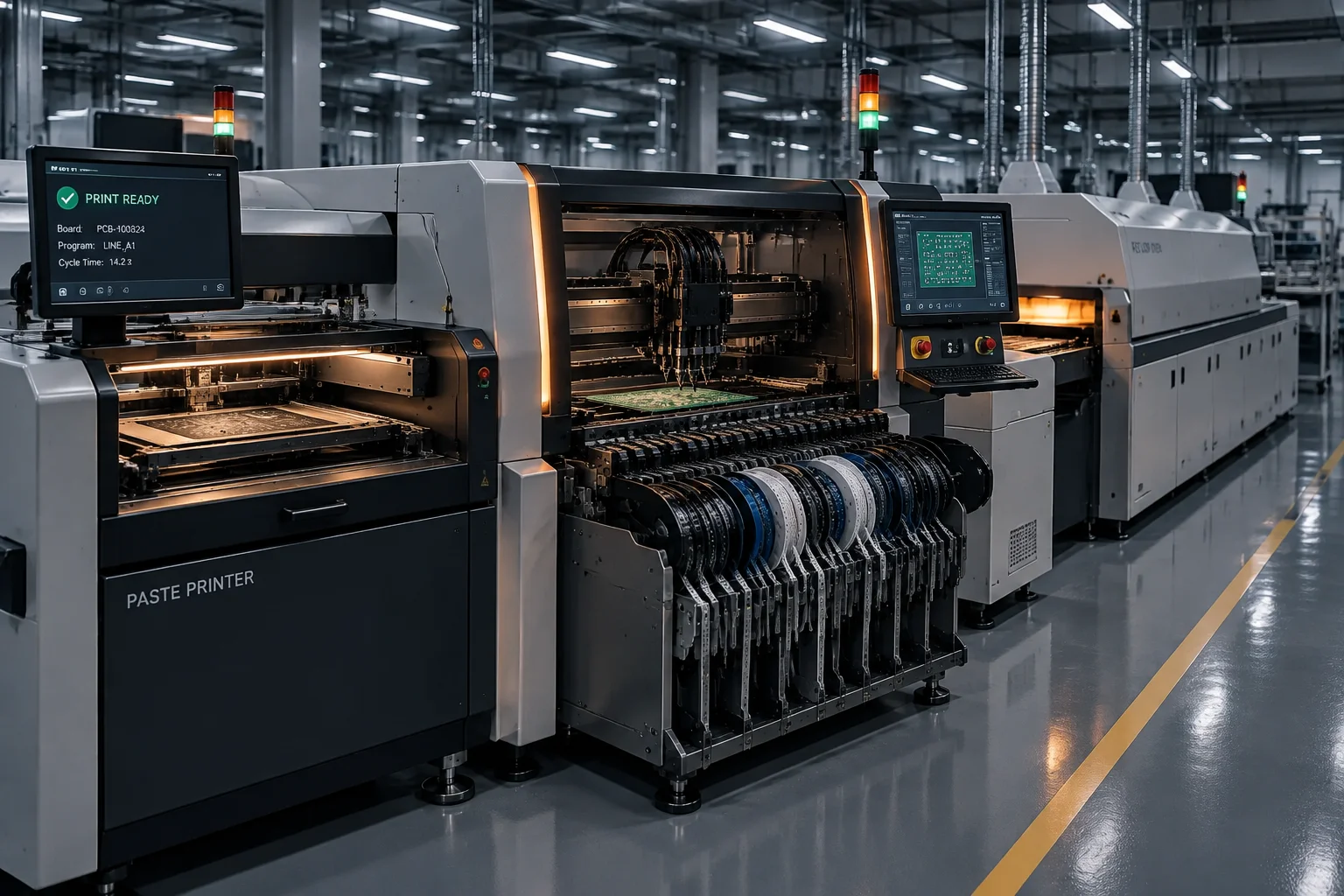
We assemble printed circuit board assemblies for OEMs in industrial automation, medical devices, automotive and EV, aerospace and defence, consumer IoT and energy. Six SMT lines, three DIP lines and a test floor under one ISO 9001:2015 and ISO 13485:2016 system.
BUILD LEDGER 2008–2026 / 6 SMT LINES / 3 DIP + SELECTIVE SOLDER / 01005 TO 0.35 MM PITCH / IPC-A-610 CLASS 2 & 3 / X-RAY ON EVERY BGA
Capacity and quality
A plant sized for prototype volumes and volume programmes
Founded in 2008 and run from a 6,400 m² site in Bayan Lepas, of which 4,100 m² is ESD-controlled production area. Two of the six SMT lines are configured for high-mix work that changes over several times per shift.
2008 to 2026, building for OEMs that buy on evidence: process data, first-article reports and traceable lot records rather than promises.
Three high-speed chip-shooter lines at 40,000–80,000 CPH and three flexible lines for 01005 up to 510 × 460 mm boards.
Defects per million opportunities across 4.1 million placements in 2025, supported by 100% AOI coverage on every SMT build.
In-line QC gates
The four gates every build passes, and the limit it must hit
SPI, AOI, X-Ray and ionic cleanliness are controlled in line and reported per lot. The acceptance limits below are the ones the process is audited against, not marketing ranges.
Capability index
Everything we assemble and test, in one index
Eleven capability pages, each with its own process limits, acceptance criteria and tooling notes. Use the index to check that the process you need is already qualified rather than quoted as a first attempt.
Assembly and process
SMT Assembly
Chip-shooter lines run 40,000–80,000 CPH and hold placement accuracy of ±15–25 µm on 0201 and 01005 passives.
Through-Hole Assembly
Three DIP and wave lines plus a selective-soldering cell, handling 0.4 mm leaded pitch and boards from 0.4 to 4.0 mm thick.
Mixed-Technology Assembly
SMT reflow, wave and selective solder on one panel, moving between processes inside a single ESD-controlled route of 4,100 m².
Prototype to Production
Prototypes in 3–5 working days with no minimum order quantity, then a DfM-recorded transfer to volume on the same lines and fixtures.
Component Sourcing
A second sourcing desk in Shenzhen quotes the BOM, with incoming inspection and date-code, lot and reel traceability on every line item.
Box Build
Enclosure integration for boards up to 510 × 460 mm, including harness routing, labelling, firmware load and documented test records.
Build, test and fulfilment
AOI & X-Ray Inspection
AOI on 100% of SMT builds and 3D X-Ray on every BGA and QFN, holding voids under 10% for Class 3 and under 25% for Class 2.
ICT & Functional Test
ICT, flying probe and functional test development. Flying probe runs about $3–10 per board with no fixture; ICT fixtures take 4–8 weeks.
Conformal Coating
Acrylic, polyurethane and silicone coating to IPC-CC-830, with masked connectors, cure verification and coating thickness recorded per lot.
Cable & Harness
Crimped, soldered and overmoulded harnesses built to IPC/WHMA-A-620 Class 3, with pull-test records and continuity results filed per assembly.
Customer Logistics
Kanban, VMI and consignment fulfilment shipped on EXW, FOB Penang, CIF, DAP or DDP terms, running at 98.1% on-time delivery.
Quality System
The quality system behind the eleven capability pages: published metrics, audit scope and the non-conformance route, at 99.4% first-pass yield.
Certifications and standards
Eight credentials your quality team will ask for
Registrations, audits and workmanship standards held at this site. Scans and certificate numbers are issued under NDA with the quality pack rather than published here. UL and ITAR registration are held by partner facilities and are available on request.
ISO 9001:2015
Quality management system registered since 2011 and audited annually. Every build carries lot-level process and inspection records.
ISO 13485:2016
Medical device quality management, written to FDA 21 CFR 820 device-history-record discipline with UDI-level traceability.

IATF 16949 (audited)
Audited against IATF 16949 requirements for automotive programmes, with PPAP documentation and 15-year record retention.
AS9100D (audited)
Audited to AS9100D with AS9102 first-article inspection reports and ITAR-aware data handling on defence-adjacent programmes.
IPC-A-610 Class 2 & 3
Class 2 process target holds 2–5% rejection; Class 3 runs 8–15% and carries a 20–40% cost premium.
J-STD-001
Soldering requirements applied to every hand-solder, wave and selective-solder operation, with operator re-certification each year.
ANSI/ESD S20.20
4,100 m² of ESD-controlled production area with daily wrist-strap and footwear testing along the assembly route.
RoHS 3 / REACH
RoHS 3 covers 10 restricted substances with REACH SVHC declarations and conflict-minerals reporting supplied per BOM.
Full certificate set, scope statements and audit reports: available on request under NDA.
Buyer comparison
What a typical contract assembler quotes against what we commit to
Nine lines that decide whether a programme survives its first production release. The right-hand column is what this facility is measured on.
| Decision point | Typical contract assembler | GENESIS CIRCUITS |
|---|---|---|
| Prototype minimum order | MOQ of 10–25 boards, so design faults are paid for at volume prices | Zero MOQ on prototypes; single units built and shipped |
| Production minimum | MOQ of 500–1,000 boards per revision | MOQ 1 panel, roughly 20–60 boards depending on panelisation |
| Quotation turnaround | Quote issued in 3–5 working days, rarely with DfM notes | Unit price and DfM notes in 48 hours, held valid for 30 days |
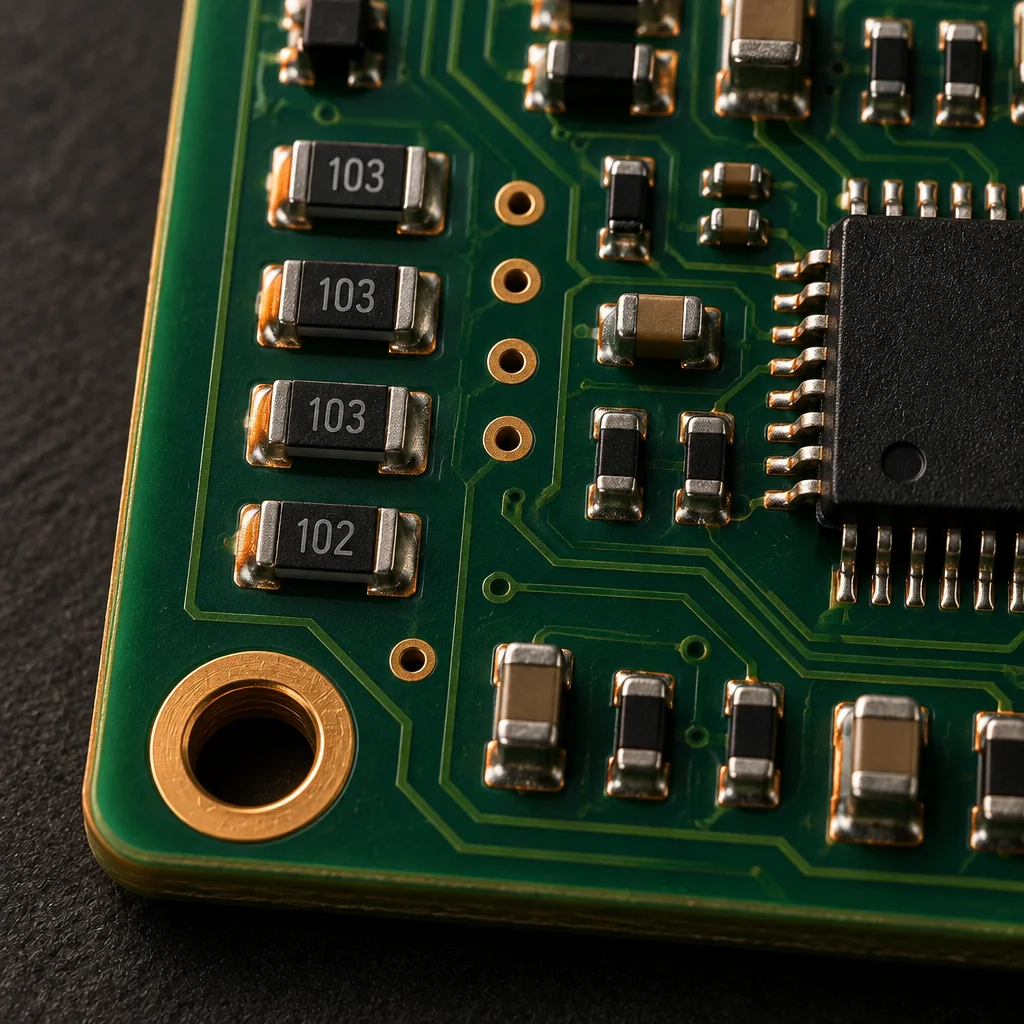
| Minimum chip size placed | 0402 and 0201, with 01005 declared out of process | 01005 (0.4 × 0.2 mm) and 0201 at ±15–25 µm placement accuracy |
| Lead pitch | 0.5 mm leaded; finer pitch referred to a partner plant | 0.35 mm leadless and 0.4 mm leaded placed in house |
| SMT quality metric | Yield claimed at 95–98% with no per-placement defect figure | 0.42% DPMO on SMT placements, reported per lot |
| BGA inspection | X-Ray on request as a chargeable extra on selected joints | X-Ray on every BGA and QFN, voids held under 10% for Class 3 |
| Traceability | Board-level serial and a packing list | Reel-level date codes, lot numbers and process records per serial |
| On-time delivery | Reported at 90–94% across all programmes | 98.1% measured against the committed ship date |
Operations ledger
Six live programmes engaged this month
Anonymised in-flight programmes from the current production schedule, showing the spread of sector, volume band and board technology the plant runs at the same time. Identities are withheld under customer NDA.
| Programme | Sector | Volume band | Board technology | Status |
|---|---|---|---|---|
| NPI-2418 | Industrial automation | 180 pcs / month | 6-layer FR-4, 0201 passives, 0.4 mm QFN | In production |
| NPI-2421 | Medical devices | 25 pcs / month | 8-layer FR-4, CTI 600 V laminate, 5.0 mm clearance | In production |
| NPI-2426 | Automotive & EV | 2,400 pcs / month | 4-layer FR-4, AEC-Q100 parts, Grade 0 range | PPAP |
| NPI-2431 | Aerospace & defence | 40 pcs / quarter | 12-layer polyimide, Class 3, AS9102 first article | First article |
| NPI-2434 | Consumer & IoT | 9,000 pcs / month | 2-layer FR-4, 01005 passives, panelised 4-up | Ramping |
| NPI-2439 | Energy & power | 320 pcs / month | 6-layer FR-4, 3.2 mm thick, high-current joints | Qualification |
Published performance
Three numbers we publish and report every month
Measured on shipments from the Penang plant, updated monthly and available as a trend sheet with the quality pack.
Share of assemblies that pass AOI, X-Ray and electrical test on the first pass, with no rework operation.
Shipments dispatched on or before the committed date, calculated per line item across all customer programmes.
Units returned for any workmanship reason in the 12 months to December 2025, out of all boards shipped.

Sectors
Four sectors we build for, and the standard each one is audited against
Every sector carries its own qualification burden. These are the four where our registrations and inspection capability already match what buyers in the sector require.
Industrial automation
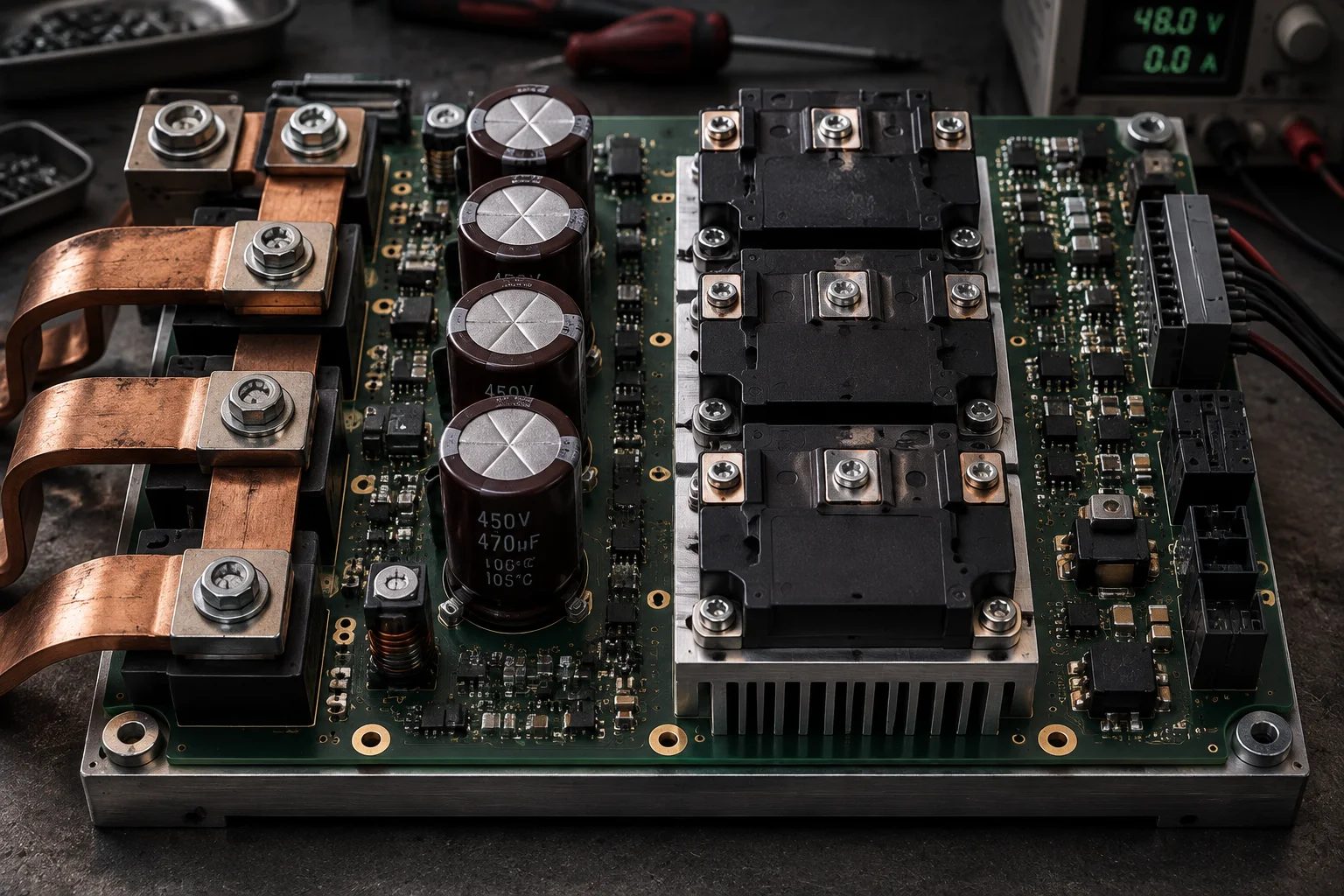
Motor drives, PLC I/O and encoder interfaces built for 24/7 duty and a 10–15 year field life. Conformal coating, 4 oz copper capability and 85 °C / 85% RH endurance are standard on these programmes.
Sector requirements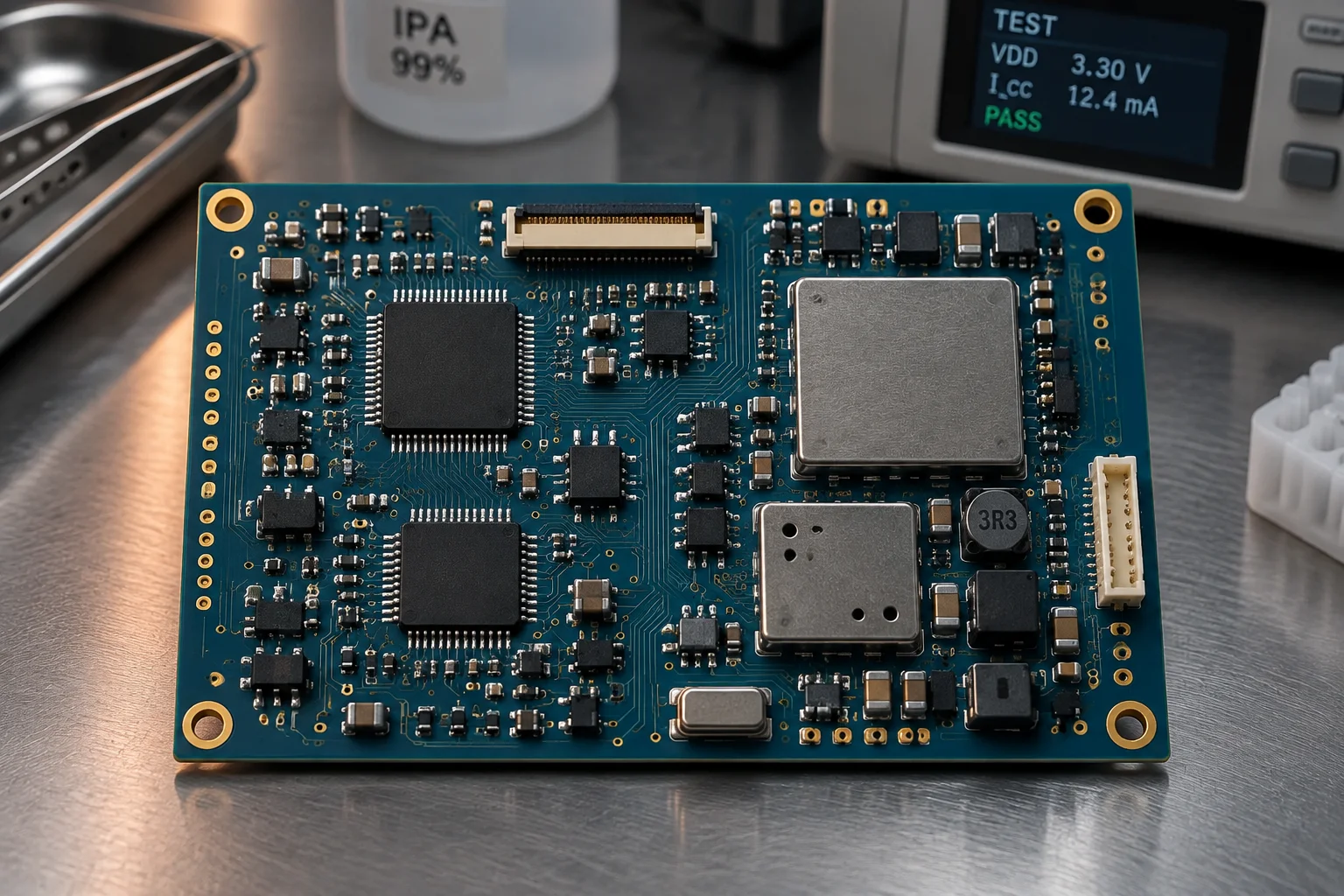
Medical devices
Diagnostics and patient-interface boards under ISO 13485:2016 with device-history-record discipline. Isolation barriers are routed to the IEC 60601-1 2×MOPP clearance and creepage figures, not estimated.
Sector requirements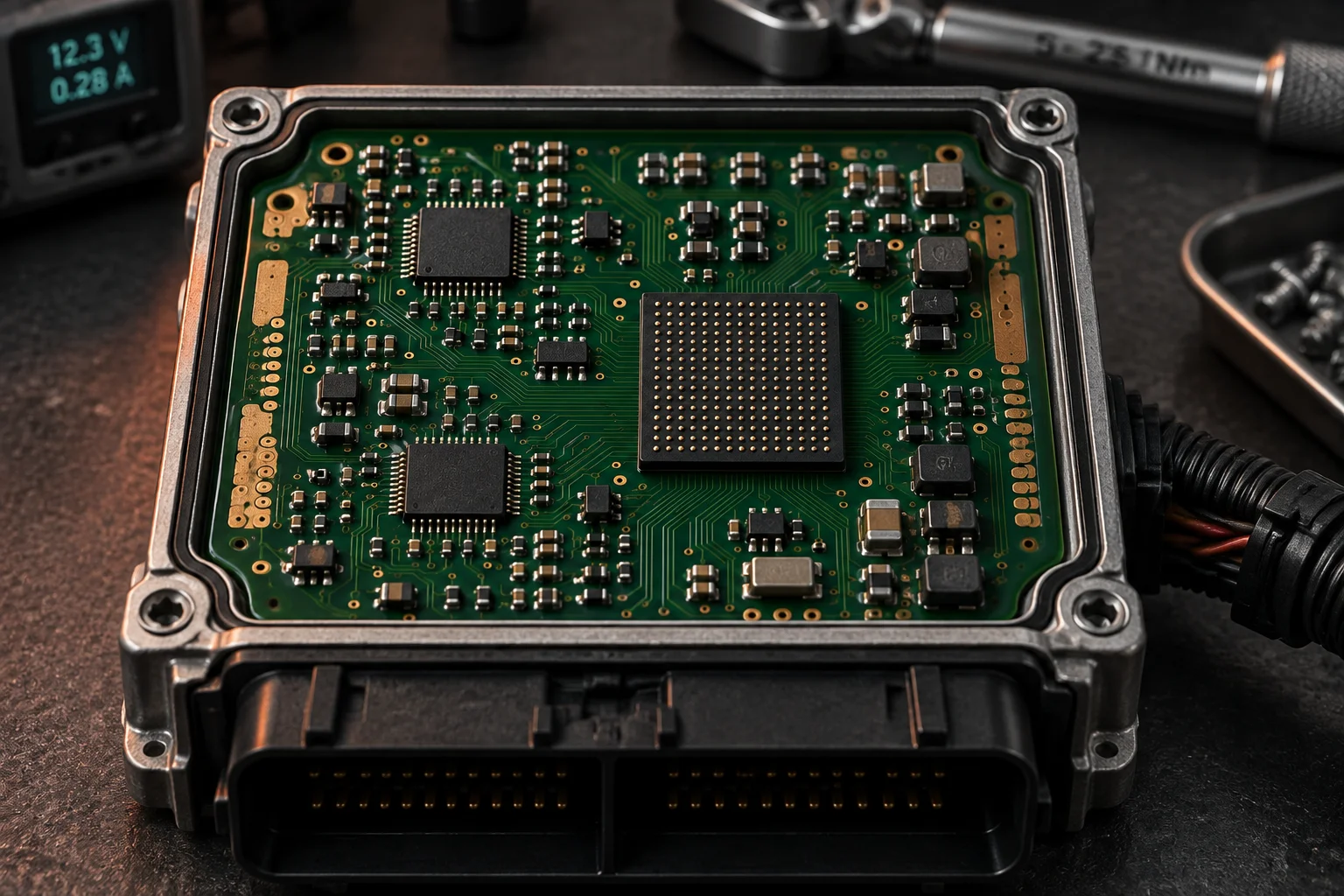
Automotive and EV
Battery-management and charging boards qualified against IATF 16949 and AEC-Q requirements, with PPAP documentation and 15-year record retention. Grade 0 parts run −40 to +150 °C.
Sector requirements
Consumer and IoT
High-mix builds where BOM cost is measured in fractions of a cent, panel utilisation is tuned per programme and FCC Part 15 and CE (EMC + LVD) evidence is produced in parallel with tooling.
Sector requirementsEvidence
Three things you can verify before you place an order
Each figure below comes from plant records that are shared on request, with the method and the sample period attached.
Two defect figures held through a full production year
First-pass yield of 99.4% and 0.42% DPMO sustained across 4.1 million placements in 2025, with no month outside the published band.
Inspection that runs on every build, not on sampled builds
AOI covers 100% of SMT builds and 3D X-Ray covers every BGA and QFN, holding voids below 10% where a Class 3 assembly is specified.
Material traceability back to the reel
Date codes, lot numbers and supplier records are held against each board serial, so a field question can be closed from the device history record instead of a stock count.
New product introduction
From enquiry to shipped assembly in six stages
The same route runs a single prototype and a 9,000-piece monthly programme. At each stage, the column on the right is what we need from you to keep the date.
Enquiry and quote
Send Gerbers or CAD, the BOM and your quantity. You receive a unit price, NRE, lead time and the first DfM notes within 48 hours, and the price holds for 30 days. What we need from you: the assembly drawing, the approved-vendor list and any test specification.
DfM and component review
We check pad geometry, stencil apertures, panelisation, tombstoning risk and part availability across the BOM, then return a written DfM report with the changes we recommend and the cost effect of each one. What we need from you: a decision on alternate parts before kitting starts.
Prototype build
Prototypes ship in 3–5 working days for a simple 2-layer board and 5–10 working days for a complex assembly, with zero MOQ. What we need from you: confirmed bare-board delivery dates if you consign the boards.
First article and documentation
First-article inspection follows within two working days of build completion, with dimensional and solder-joint results plus the AS9102 report where the programme is aerospace. What we need from you: sign-off on the golden sample before the production release.
Production
Volume runs start at one panel and scale to 9,000 pieces per month on the same lines, with SPI, AOI and X-Ray data recorded per lot. What we need from you: a rolling 8-week forecast so component lead times can be covered.
Test and fulfilment
ICT, flying probe or functional test runs to the coverage agreed at DfM, then assemblies ship on EXW, FOB Penang, CIF, DAP or DDP terms at 98.1% on-time delivery. What we need from you: the ship-to address and the labelling standard.
Questions buyers ask first
Answers to the four questions that decide the first order
If your question is about process limits rather than commercial terms, the capability index above links to the page that carries the numbers.