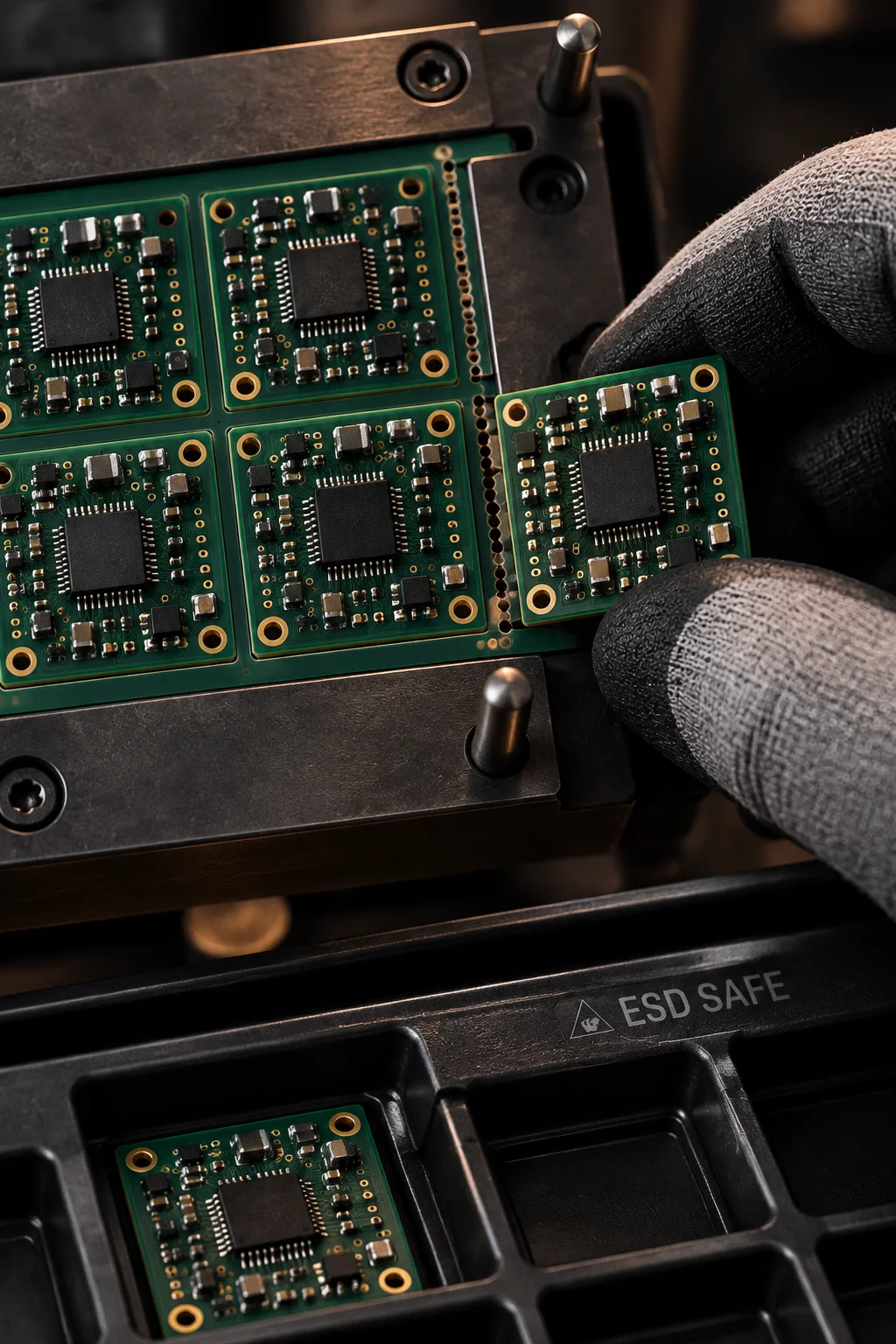
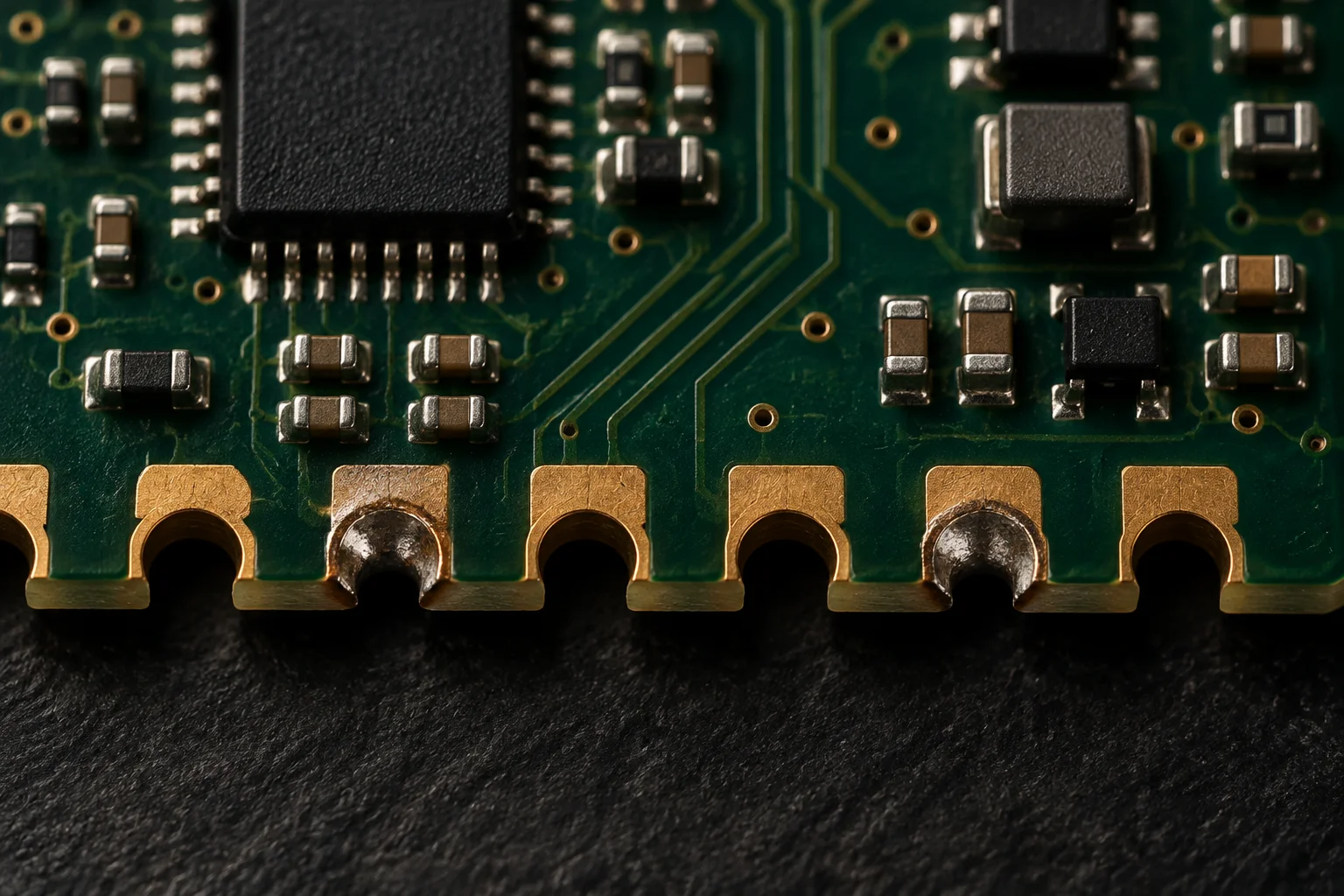
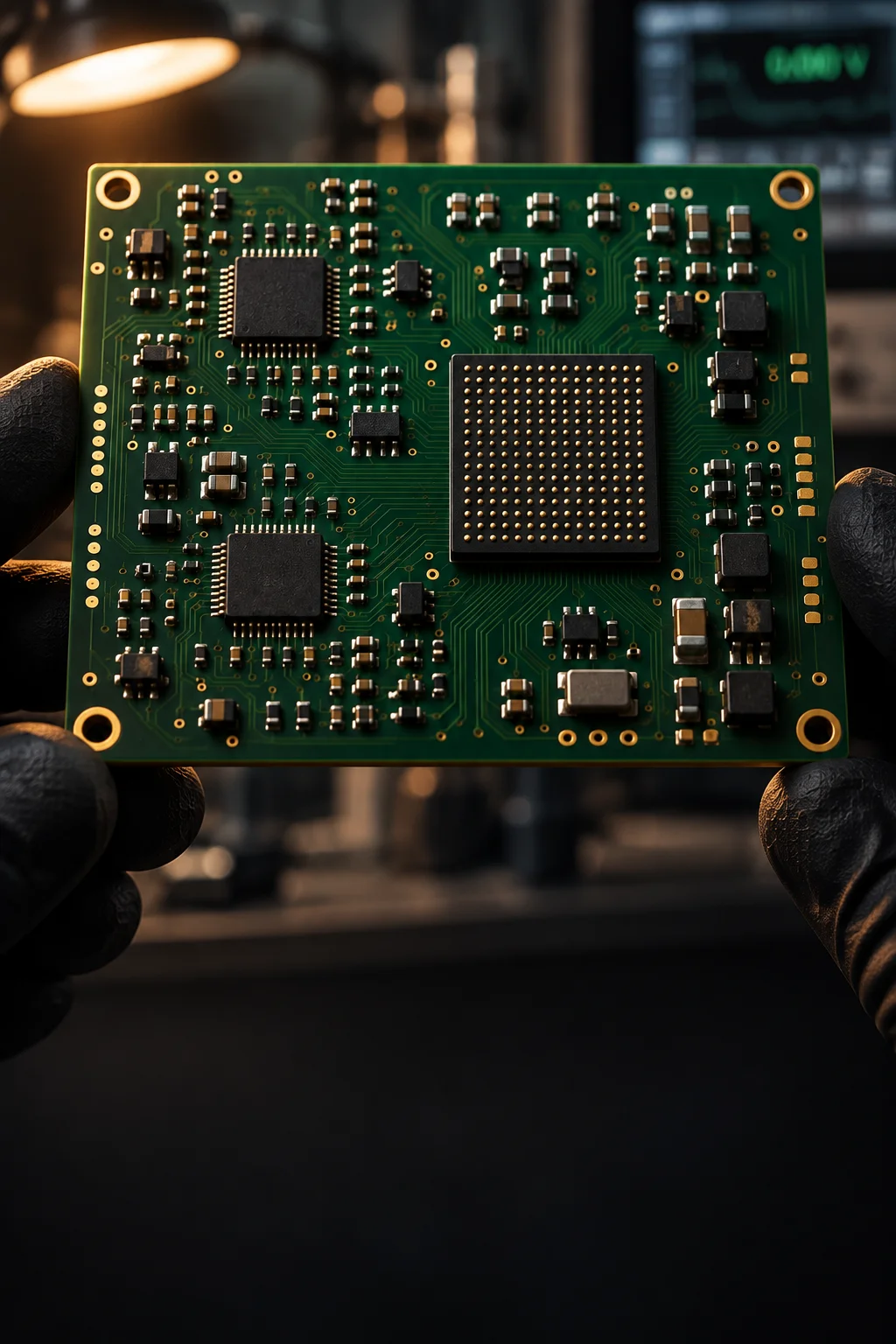
Compact IoT sensor module with a shielded radio section beside dense 0201 passives and an integrated antenna keep-out

Sector / Consumer electronics and IoT devices

PCBA for Consumer Electronics and IoT Devices

Consumer work is won or lost on cost per unit and lost again on returns. A few cents of placement pattern, one extra reflow pass, or a radio section that fails a pre-scan can move a product from margin to loss at the volumes where it matters, so the design conversation has to happen before the tooling is cut.

NPI to Production

FCC Part 15 - CE EMC and LVD - RoHS 3 and REACH - WEEE - UN38.3 for battery products - 100% AOI coverage - zero MOQ on prototypes

Buyer pain points

Four numbers that decide a consumer programme

Cost, certification timing, ramp speed, and return rate. Each is measured in money or in weeks, and each is controllable at the design stage.

Quantified programme costs in consumer and IoT builds
Pain point The number Consequence if it is left unmanaged
Cost per unit and the volume band A 200-placement board runs $40-80 at 1-5 pieces and $3-7 at 1,000+ excluding the BOM. A design that cannot be repanelled or moved to single-sided placement stays in the expensive band, so the unit price never reaches the retail model.
Assembly choices that inflate cost Double-sided assembly adds 60-100%, and every unique resistor value adds a feeder change at roughly $2-3. A bill of materials with mixed 0201, 0402, 0603, and 0805 passives and dozens of unique values quietly adds cents per unit at any real volume.
Certification timing FCC Part 15 and CE EMC plus LVD have to run in parallel with tooling rather than after it. A pre-scan started after tooling is cut turns a radio or shield-can change into a second tooling cycle and a slipped season.
Returns from infant mortality Marginal solder joints pass functional test and fail in the customer's hands in the first weeks. An infant-mortality return is the most expensive kind, because it carries a review as well as a replacement, and it is invisible to any test that does not stress the joint.
cost-and-compliance / IOT-9080
programme      IOT-9080 - 4-layer FR-4, 0201 and 0402 passives
product        smart-home sensor, mains-powered variant in family
panel          4-up, 5 mm rail, single-sided assembly
placements     198 per board, 0 micro-BGA
unit cost      $4.10 at 1,000+ pcs, excluding the BOM
proto cost     $62.00 at 5 pcs, excluding the BOM
nre           $184 per order: stencil, programming, reflow profile
fcc part 15    pre-scan pass, margin 4.8 dB at the worst harmonic
ce emc + lvd   pre-scan pass, conducted emissions inside the limit
weee          registered, take-back marking applied
un38.3        not applicable in the mains variant, applies to battery SKU
aoi coverage   100% of placements, X-Ray not required this design
field return   0.06% of units over the first 12 months
        
IoT module panel in 4-up format showing single-sided placement, antenna keep-out areas, and a shield-can footprint

How the build is run

Cost is designed in before the tooling is cut

Where the cents actually are

On a consumer board the component cost is the customer's problem and the assembly cost is ours, and most of the controllable assembly cost sits in four decisions: how many unique passive packages the design uses, how many unique values it carries, whether it needs a second reflow pass, and how well it panels. Moving a 200-placement design from mixed 0201, 0402, 0603, and 0805 passives to a single dominant package, and consolidating duplicated resistor values, removes feeder changes that cost roughly $2-3 each on a changeover. That is the difference between the $40-80 prototype band and the $3-7 band at 1,000+ pieces, and it is a design decision rather than a purchasing one.

Certification runs alongside tooling, not after it

FCC Part 15 and the CE EMC plus LVD route are schedule risks rather than technical ones, and the risk is created by sequencing. We build production-intent pre-compliance samples from the first panel so the emission scan runs on the real stackup, the real antenna keep-out, and the real shield-can footprint rather than a hand-modified prototype. If the radiated scan comes back with insufficient margin at the worst harmonic, the fix is an antenna match or a shield change, and the cheapest week to find that out is the week the tooling is being cut. WEEE registration and take-back marking are handled with the same paperwork pass, and UN38.3 applies to any SKU that ships with a battery.

Ramp speed and return control

Seasonal ramps need capacity that can be committed before the forecast is firm, which is why the production path is kept free of requalification gates between the prototype run and volume. Six SMT lines with 40,000-80,000 CPH chip-shooter capacity absorb a seasonal peak, and the same AOI recipes and panel designs carry from the pilot lot into the peak build. Returns in consumer electronics are dominated by infant mortality rather than wear-out, so 100% AOI coverage, X-Ray on every BGA and QFN, humidity soak on sealed and outdoor products, and burn-in on radio and battery modules where the return cost justifies the test time do more for the return rate than any incoming inspection.

Requirements to capability

Cost and compliance requirement mapping

Each row is a decision that moves unit cost or blocks a shipment, with the artifact that closes it out.

Consumer and IoT cost and compliance requirement mapping
Requirement Governing standard What we do Evidence
Minimum component size IPC-A-610 Class 1 and Class 2 Place 0201 and 01005 passives at 0.4 x 0.2 mm on the high-speed chip-shooter lines at 40,000-80,000 CPH, with SPI before reflow. Placement program and SPI record
Panel utilization IPC-2221, IPC-7351 Repanel to 2-up or 4-up with a 5 mm minimum rail for AOI clearance, halving or quartering the stencil prints and oven passes per unit. Panel drawing and rail measurement
Assembly cost reduction IPC-2221 design practice Costed DFM suggestions that consolidate passive packages, unify duplicated values, favour single-sided placement, and remove unnecessary second-pass assembly. Costed DFM report with savings per change
Part-count consolidation IPC-7351 Reduce unique values and packages on the bill of materials, since each unique reel adds a feeder change worth roughly $2-3 on a changeover. Revised bill of materials with feeder count
Radio-frequency integration FCC Part 15, CE RED Antenna keep-out enforcement, matching network review, and shield-can placement checked at DFM, because an RF layout error surfaces as a certification failure rather than a build defect. Pre-compliance scan report
Double-sided assembly control IPC-A-610 Class 2 Second-pass reflow with UV or thermal-cure adhesive dots on heavy bottom-side parts at $0.01-0.03 per component, avoided entirely where the design allows. Process routing and adhesive record
Electromagnetic compliance FCC Part 15, CE EMC Directive Production-intent pre-compliance samples built from the first panel so radiated and conducted scans run on the real stackup and antenna keep-out. Pre-scan data and margin statement
Electrical safety CE LVD, IEC 62368-1 awareness Creepage and clearance review for mains-powered SKUs in the product family, with the isolation gap held through coating and connector assembly. DFM safety review and gap measurement
Battery shipping compliance UN38.3, IEC 62133 awareness Battery SKUs assembled with the pack handling and test-evidence requirements of UN38.3 applied, and kept as a separate build variant from the mains-powered board. Battery test summary reference per SKU
Waste and recycling obligations WEEE Directive Take-back marking applied at assembly where the customer's registration requires it, and material content recorded for the recycling declaration. Marking verification and material record
Substance compliance RoHS 3, REACH SVHC, Prop 65 RoHS 3 across 10 restricted substances with REACH SVHC screening and California Proposition 65 awareness carried on the bill of materials. Declaration of conformity per shipment
Return-rate control IPC-A-610 Class 2, IPC-7095 100% AOI coverage, X-Ray on every BGA and QFN, humidity soak on sealed and outdoor products, and burn-in on radio and battery modules. AOI and X-Ray pass record per serial
Fast prototype turnaround IPC-2581 data exchange Zero MOQ on prototypes with 3-5 working day turnaround on a simple 2-layer board and 5-10 days on a complex one, feeding volume without a requalification gate. Build record and first-pass test data

Services for this sector

What a consumer programme takes off the shelf

Each of these is a standing service rather than a change order, so it can be applied to a running programme without a new qualification cycle.

SVC-01

Costed design-for-assembly review

Gerbers and a bill of materials reviewed with the saving attached to each change: passive package consolidation, duplicated-value removal, single-sided conversion, and repanelization. Reported in dollars per unit at the customer's stated volume rather than as a list of observations, so the redesign can be costed before it is accepted.

SVC-02

Turnkey component sourcing

Sourcing to a target bill-of-materials cost through authorized distribution, with a second sourcing desk in Shenzhen for allocation recovery and cross-referencing. Long-lead radio modules and battery packs are flagged at quotation because they set the ramp date rather than the assembly schedule.

SVC-03

Pre-compliance build support

Production-intent samples from the first panel for FCC Part 15 and CE EMC plus LVD scanning, plus variant builds for antenna matching and shield-can changes. The scan runs on the real stackup, so a finding changes the layout rather than invalidating the tooling already cut.

SVC-04

Rapid prototype turnaround

Zero MOQ on prototypes, with 3-5 working day turnaround on a simple 2-layer board and 5-10 days on a complex design. Prototypes run on the same lines and AOI recipes as volume production, so the pilot lot is a real sample of the production process rather than a lab build.

SVC-05

Volume test economics

Test strategy chosen by volume band: functional test alone at 1-100 units, flying probe plus functional test at 100-1,000, and ICT with functional test above 1,000. Flying probe avoids fixture spend, and the $2,000-50,000 ICT fixture is only committed when the volume amortises it.

SVC-06

Seasonal ramp capacity

Six SMT lines running at 40,000-80,000 CPH on the chip-shooter capacity absorb a seasonal peak without moving the design to a new supplier. Panel design, AOI recipes, and test programs carry from pilot to peak, so the ramp adds capacity rather than a requalification.

Programme record

A smart-home sensor family moved into the volume cost band

The four elements: sector, requirement, what we did, and the result in numbers.

Record

Sector
Smart home and building sensors
Programme
IOT-9080
Volume
180,000 units per year
Class
IPC-A-610 Class 2

Requirement

A 4-layer sensor board with 198 placements, a radio section that had to clear FCC Part 15 and the CE EMC route, and a unit cost target that the existing 2-up panel and mixed passive packages could not reach. The first certification attempt at another supplier had been run on a hand-modified prototype, and the tooling had already been cut when the scan failed.

What we did

Repanelled from 2-up to 4-up with a 5 mm rail, consolidated the passive packages to a dominant 0201 body with a single 0402 outlier, merged thirty-one duplicated resistor values down to nineteen, and removed the second reflow pass by moving the two heavy bottom-side parts to the top. Rebuilt the antenna keep-out and shield-can footprint, then ran the pre-compliance scan on production-intent panels rather than a prototype.

Cost and compliance summary showing unit cost at two volume bands, NRE breakdown, and pre-compliance emission margins

Result

Unit cost at 1,000+ pieces landed at $4.10 from $6.85 on the original construction, against the $3-7 band for a 200-placement board at that volume. Prototype cost ran $62.00 at 5 pieces, and NRE came to $184 per order including the stencil, programming, and reflow profile. The FCC Part 15 pre-scan passed with 4.8 dB of margin at the worst harmonic, and the CE EMC and LVD route passed on the same panel without a shield-can change. Feeder changes per changeover fell from 46 to 28, and field returns ran at 0.06% of units over the first 12 months across 180,000 boards.

Buyer questions

Cost, certification timing, and returns

Get Quote Call Us
marker. Behaviour comes from inquiry-handler.js via data attributes — no inline JS, no onclick, no inline style (CSP: script-src 'self'; style-src 'self'). ============================================================================ --> marker. Behaviour comes from inquiry-handler.js via data attributes — no inline JS, no onclick, no inline style (CSP: script-src 'self'; style-src 'self'). ============================================================================ --> marker. Behaviour comes from inquiry-handler.js via data attributes — no inline JS, no onclick, no inline style (CSP: script-src 'self'; style-src 'self'). ============================================================================ -->