Sector / Industrial automation and process control
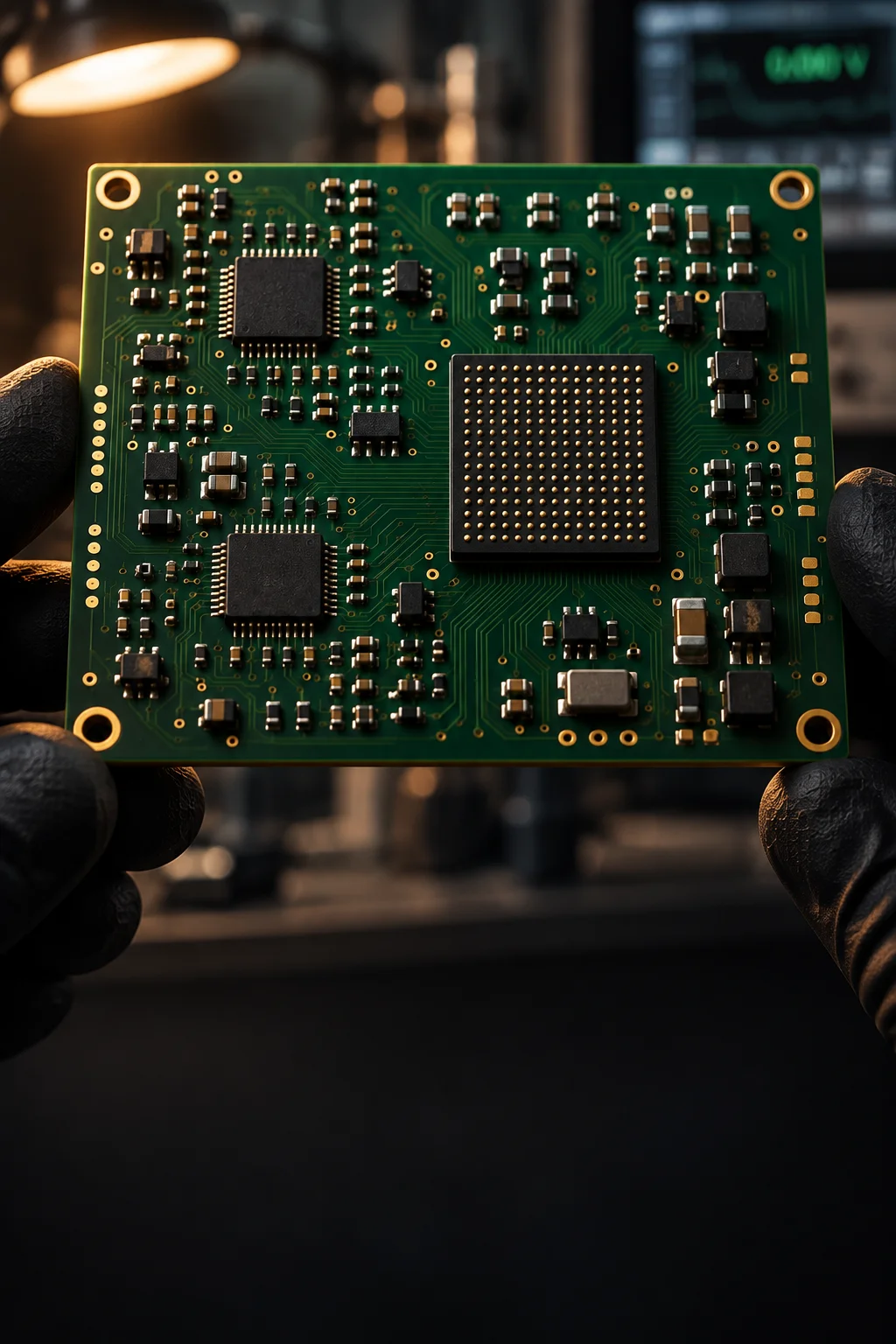
PCBA for Industrial Automation and Process Control
A controller that runs 24 hours a day for a decade is a different manufacturing problem from a product that runs for two years. The failures that matter are corrosion and fatigue, not start-up defects, and the cost of a field failure is a stopped production line rather than a returned unit.
IPC-A-610 Class 2 and Class 3 - UL recognition - EN 61010 awareness - ANSI/ESD S20.20 - selective soldering cell - 85 C / 85% RH endurance
Buyer pain points
Where industrial automation programmes actually lose money
Each of these is a number an automation OEM already owns. They are the reasons an industrial board cannot be bought on unit price alone.
| Pain point | The number | Consequence if it is left unmanaged |
|---|---|---|
| Field life mismatch | 24/7 duty over 10-15 years is roughly 88,000 to 130,000 powered hours. | A board qualified on a 1,000-hour bench test can pass validation and still corrode in year three in a wash-down plant. |
| Humidity and thermal cycling | 85 C at 85% RH endurance plus repeated -40 C to +125 C cycling. | Untreated assemblies grow conductive anodic filament paths and via-barrel cracks that no AOI image can predict. |
| Semiconductor obsolescence | Six of our last 24 industrial programmes needed a board revision within 3 years. | A last-time buy without a redesign plan becomes a scrapped inventory position plus a forced redesign under production pressure. |
| Vibration and mechanical fatigue | Continuous motor and actuator vibration over a decade of shifts. | Heavy through-hole and connector joints crack at the fillet, and the failure appears as an intermittent fault that never reproduces on the bench. |
Reliability test results, stated as they are reported
The block below is the qualification summary format we return with an industrial build. The values are the parameters the panel was processed to and the acceptance limits it was checked against.
programme   IND-2417 - 6-layer FR-4, Tg 170 C, 2 oz outer copper
duty        continuous, 24/7, 10-15 year field-life target
endurance    PASS  85 C / 85% RH, 1000 h, 50 V bias, no CAF failure
cycling      PASS  -40 C to +125 C, 200 cycles, no via-barrel crack
cleanliness  PASS  0.61 ug NaCl/cm2 against the 1.56 ug Class 2 limit
coating      acrylic conformal coat, 25-75 um cured thickness
inspection   100% AOI, X-Ray on all BGA and QFN
coverage     98.6% of nets reached by flying probe and FCT
dpmo        0.42% on SMT placements, reported per programme
fpy         99.4% first-pass yield on the SMT lines
How the build is run
Built for a decade of vibration and humidity, not just for first-pass yield
Thermal mass and power joints
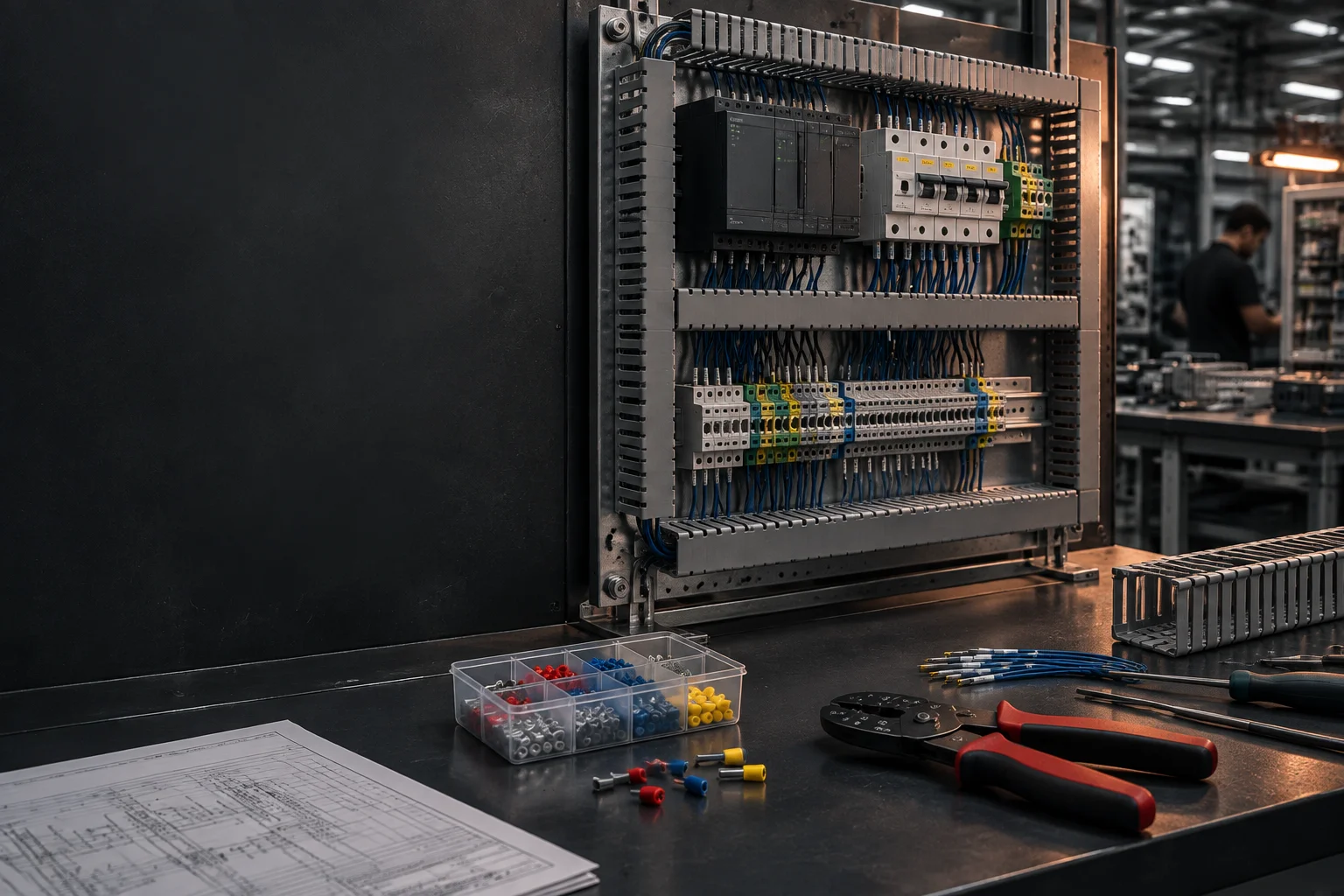
A drive or PLC rack mixes a 2 oz copper power stage with 0402 logic, and the two need different soldering physics on the same panel. Heavy through-hole and press-fit power devices go through the selective-soldering cell with a dedicated nozzle and a soaked preheat, while the SMT side runs a 10-zone forced-convection profile peaking at the 217 C SAC305 liquidus. Joint fill on the power devices is verified by X-Ray rather than by eye, because a 75% barrel fill looks identical to a 100% fill from above.
Corrosion control before it starts
Humidity is the slow failure in an automation panel. Boards are cleaned in de-ionized water and tested for ionic contamination against the 1.56 ug NaCl per square centimetre Class 2 limit and 0.78 ug at Class 3, then coated at 25-75 um cured thickness with connector masking and a cure verified against the coating supplier's window. Coat thickness is measured on witness coupons per batch, because a spray program drifts long before it looks wrong.
Obsolescence and component supply
Industrial programmes outlive several generations of silicon, so the bill of materials is screened for end-of-life and product-change notices at award and then every quarter. Where a part is inside a 24-month horizon we quote a last-time buy with the holding cost stated, plus an alternate part path that has either a drop-in cross or a documented layout change. Purchasing runs through authorized distribution only, with incoming microscopy and XRF on a second sourcing desk in Shenzhen, because grey-market recovery of an obsolete industrial part is exactly where a counterfeit enters a ten-year build.
Requirements to capability
Industrial requirement to capability mapping
Every row is a requirement an automation buyer writes into a specification, the standard that governs it, and the artifact that closes it out.
| Requirement | Governing standard | What we do | Evidence |
|---|---|---|---|
| Wide-temperature operation | IPC-A-610H, EN 61010 awareness | Build and validate for -40 C to +85 C continuous with a +105 C option for cabinet-mounted logic, using Tg 170 C laminate and low Z-axis CTE to stop via-barrel cracking. | Thermal-cycle report per board family |
| Humidity endurance | IPC-TM-650 method 2.6.25 | 85 C / 85% RH endurance testing with bias, then conformal coating at 25-75 um cured thickness where the enclosure does not seal. | CAF test data and coating thickness coupons |
| Thermal cycling | IPC-9701, JESD22-A104 | -40 C to +125 C cycling for 200 cycles on the qualification build, watching the plated barrel rather than the surface joint. | Cross-sections at 2 minimum per lot |
| Galvanic isolation | IEC 60664-1, EN 61010 | Creepage and clearance reviewed at DFM for the field-I/O barrier, with the isolation gap kept clear of coating shadowing and stencil bridging risk. | DFM report and isolation gap measurement |
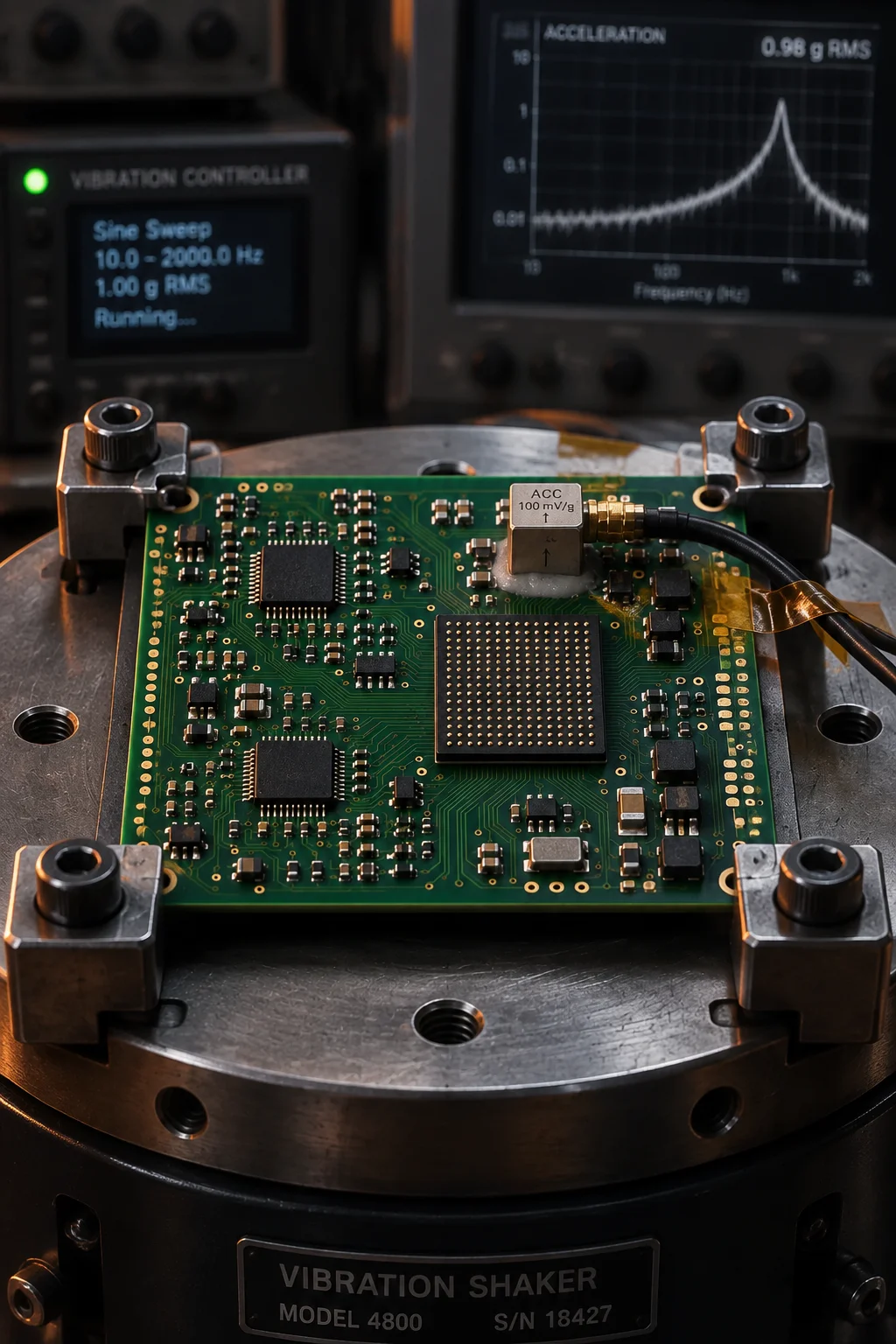
| Vibration and shock survival | IEC 60068-2-6, IEC 60068-2-27 | Staking and adhesive dots on heavy bottom-side parts, connector retention reviewed, and selective-soldered fillets on high-mass through-hole devices. | Staking record and X-Ray fill images |
| Workmanship class | IPC-A-610 Class 2 and Class 3, J-STD-001 | Class 2 baseline with Class 3 applied to safety modules, where the rejection band widens from 2-5% to 8-15% and inspection becomes 100% with no sampling. | CIS-certified inspection record per panel |
| Electrostatic control | ANSI/ESD S20.20 | 4,100 m2 of the 6,400 m2 floor is ESD-controlled, with wrist-strap and footwear testing logged per shift and ionizers on the fine-pitch stations. | ESD audit log and EPA boundary map |
| Heavy-copper power stage | IPC-6012 Class 2, IPC-2221 | 2 oz outer copper standard on drive and power stages, with thermal via arrays and selective soldering so the mass does not rob heat from the SMT side of the panel. | Copper thickness coupon and solder fill report |
| Contamination limits | J-STD-001, IPC-TM-650 | De-ionized water cleaning with ROSE or ion chromatography to 1.56 ug NaCl per square centimetre at Class 2 and 0.78 ug at Class 3. | Ionic contamination certificate |
| Functional test coverage | IPC-9252 | Flying probe plus functional test at low and mid volume with fixtureless access, moving to ICT with a bed-of-nails fixture once volume justifies the $2,000-50,000 tooling and its 4-8 week lead time. | Test coverage map and serialized FCT log |
| Traceability and field failures | IPC-1782 | Laser-marked Data Matrix per board linked to panel, operator, and test result, so a field return can be traced back to its reflow profile and material lots. | Serialized traceability file |
| Obsolescence management | IATF 16949 clause 8.4 practice, IEC 62402 awareness | Quarterly PCN and EOL screening against the approved vendor list, last-time-buy quotation with holding cost stated, and alternate-part qualification before the stock runs out. | Obsolescence register per programme |
| Functional safety evidence | IEC 61508 awareness, IEC 62061 | Documented process records, serialized test evidence, and change control on the safety-related section of the assembly so a safety case can cite the build history. | Process record package for the safety case |
Acceptance data
What we hold an industrial panel to before it ships
The three checks below are the acceptance gates a ten-year field life depends on. Each one carries a measured value and a defined failure condition.
Ionic cleanliness
Every cleaning batch is sampled for ionic contamination by ROSE or ion chromatography. The acceptance limit is 1.56 ug NaCl per square centimetre at Class 2 and 0.78 ug at Class 3, and a result of 1.31 ug passed the limit but triggered a flux-chemistry review because it sat above our own 1.0 ug internal alert line.
Thermal fatigue of the plated barrel
The qualification build runs -40 C to +125 C for 200 cycles with continuity monitored throughout. At the end of the run the panel is cross-sectioned at a minimum of 2 locations per lot and the barrel is inspected for micro-cracking and corner separation, with PTH copper held at 25 um or better.
Coating coverage
Conformal coat thickness is measured on witness coupons carried through the same spray program as the production panel. The acceptance window is 25-75 um cured, connectors and test pads are masked against capillary ingress, and any coupon outside the window restarts the batch rather than being reworked selectively.
Programme record
An industrial drive controller moved off a failing supply base
One programme, presented with the four elements that decide whether the move was worth it.
Record
- Sector
- Industrial drives and motion
- Programme
- IND-2417
- Volume
- 4,000 units per year
- Class
- IPC-A-610 Class 2 with Class 3 safety section
Requirement
A 6-layer drive control board with a 2 oz power stage and a 0402 logic section, qualified for -40 C to +85 C and a 10-year field life, with a safety-related I/O section that had to be built and documented at Class 3. The incumbent supplier had moved the programme to a new laminate without notice and the coating batch failed an 85 C / 85% RH endurance run at 700 hours.
What we did
Re-qualified the stackup on Tg 170 C laminate with low Z-axis CTE, moved the heavy through-hole power devices into the selective-soldering cell with X-Ray fill verification, cleaned and tested each batch against the 1.56 ug ionic limit, and added a 25-75 um acrylic coating with coupon verification. The bill of materials was screened for EOL and one microcontroller was replaced by a documented cross before production started.
Result
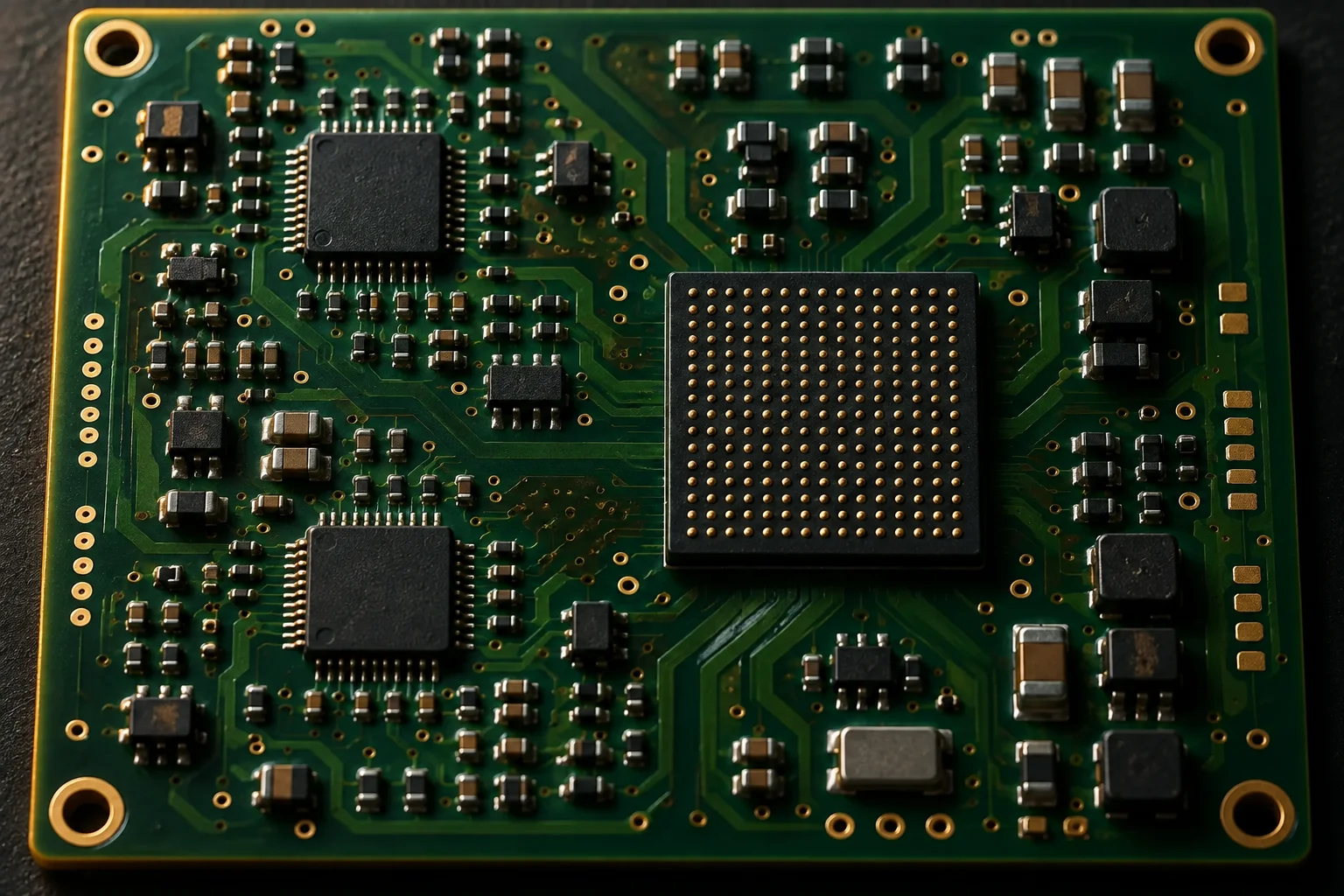
First-pass yield landed at 99.4% across the first four production lots against 96.8% at the previous supplier. Ionic contamination measured 0.61 ug NaCl per square centimetre, inside the Class 2 limit and below our internal alert line. The re-run of the 85 C / 85% RH endurance test completed 1,000 hours with no CAF failure, and the -40 C to +125 C cycle test passed 200 cycles with no barrel crack at cross-section. Field returns over the following 18 months ran at 0.06% of units shipped across 6,000 boards.
Buyer questions
Class, obsolescence, and field-life questions
Only the safety-related portion of the assembly has to be. Most industrial automation builds sit at Class 2, and we move the safety loop and any high-voltage I/O section to Class 3 at a typical industry premium of 20-40% over the Class 2 cells. Keeping the class split inside one panel avoids paying Class 3 prices on logic that a 24/7 duty cycle does not stress.
We run PCN and EOL monitoring against the approved vendor list, flag any part inside a 24-month horizon, and quote a last-time buy with the inventory-holding cost stated. An alternate part needs a drop-in cross or a layout change, and six of the last twenty-four industrial programmes we ran needed a board revision inside the first three years of production for exactly that reason.
Wide-temperature operation from -40 C to +85 C, conformal coating for humidity and contaminant protection, creepage and clearance sized for the isolation barrier, connector retention or staking for vibration, and an ionic contamination result under 1.56 ug NaCl per square centimetre. Thermal cycling from -40 C to +125 C and 85 C / 85% RH endurance testing are the two tests that predict field corrosion.