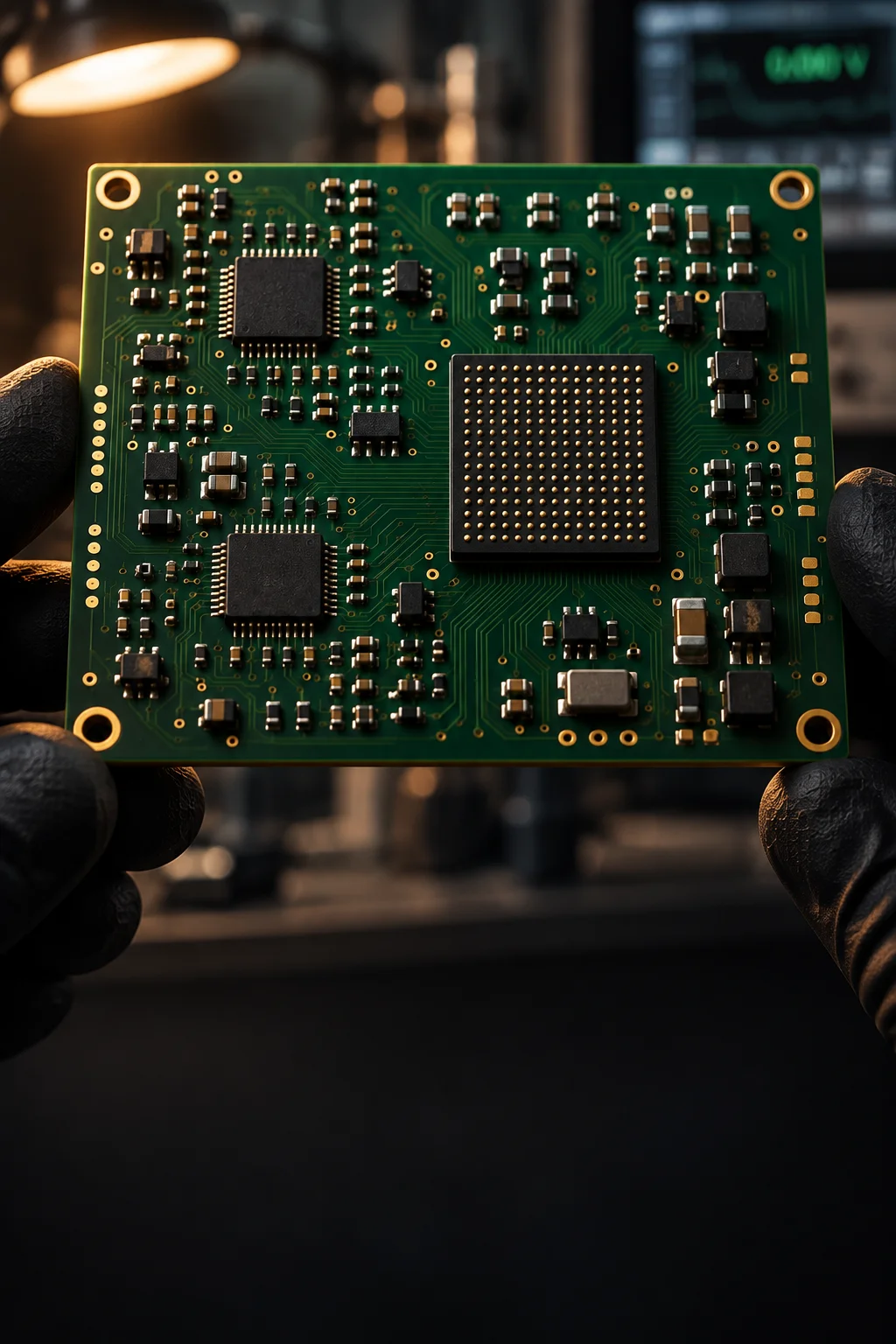
Engineering notes · 3 published

Manufacturing Notes

Short engineering notes written from programmes running on this floor, not from a marketing calendar. Each one takes a single decision that goes wrong often at a contract manufacturer, states the numbers behind it and shows what the process has to look like to avoid it. They are written on a floor with 6 SMT lines and 4,100 m² of ESD-controlled production area, which is why they stay specific about process instead of general about products; where a figure is an industry band rather than a result from this plant, the sentence says so.

3 published · 5 in preparation · reviewed February 2026 · written by the programme engineering desk, Bayan Lepas

Published notes

The three notes available today

Each note stands alone and links to no product page. Read the one that matches the decision in front of you: starting a build, buying the parts, or deciding how much inspection is enough.

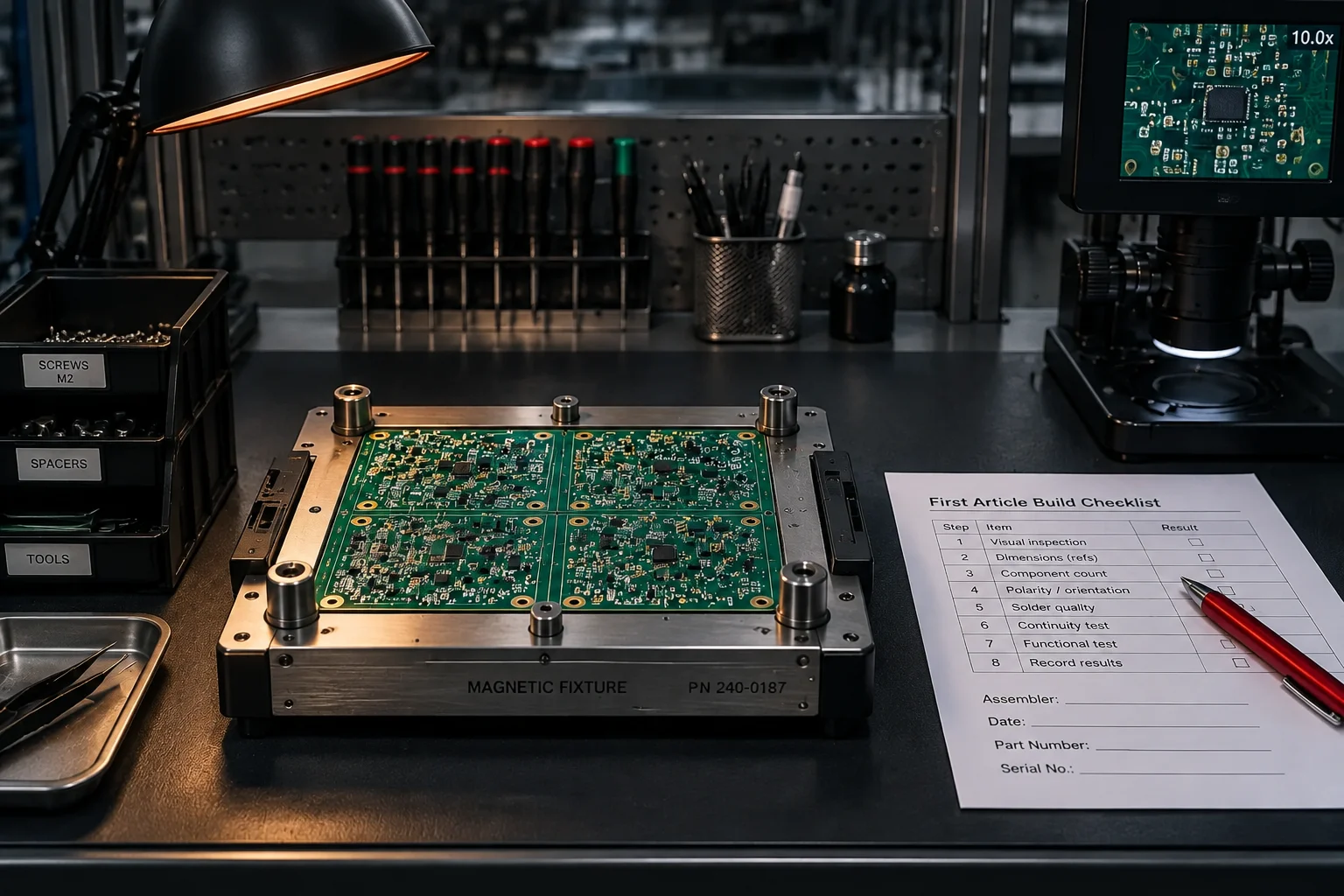
First-article inspection of a newly introduced assembly, with the build package and a partially populated panel on the bench

Note 01 / New product introduction

The NPI checklist that prevents a bad first build

Most bad first builds are not process failures; they are decisions taken before the data package was finished. This note lists the gates worth closing before a single panel is ordered, from the land patterns and the panelisation to the paste volume and the test coverage, and shows how a 24-line checklist maps onto a 3-5 day prototype turn.

Read the note
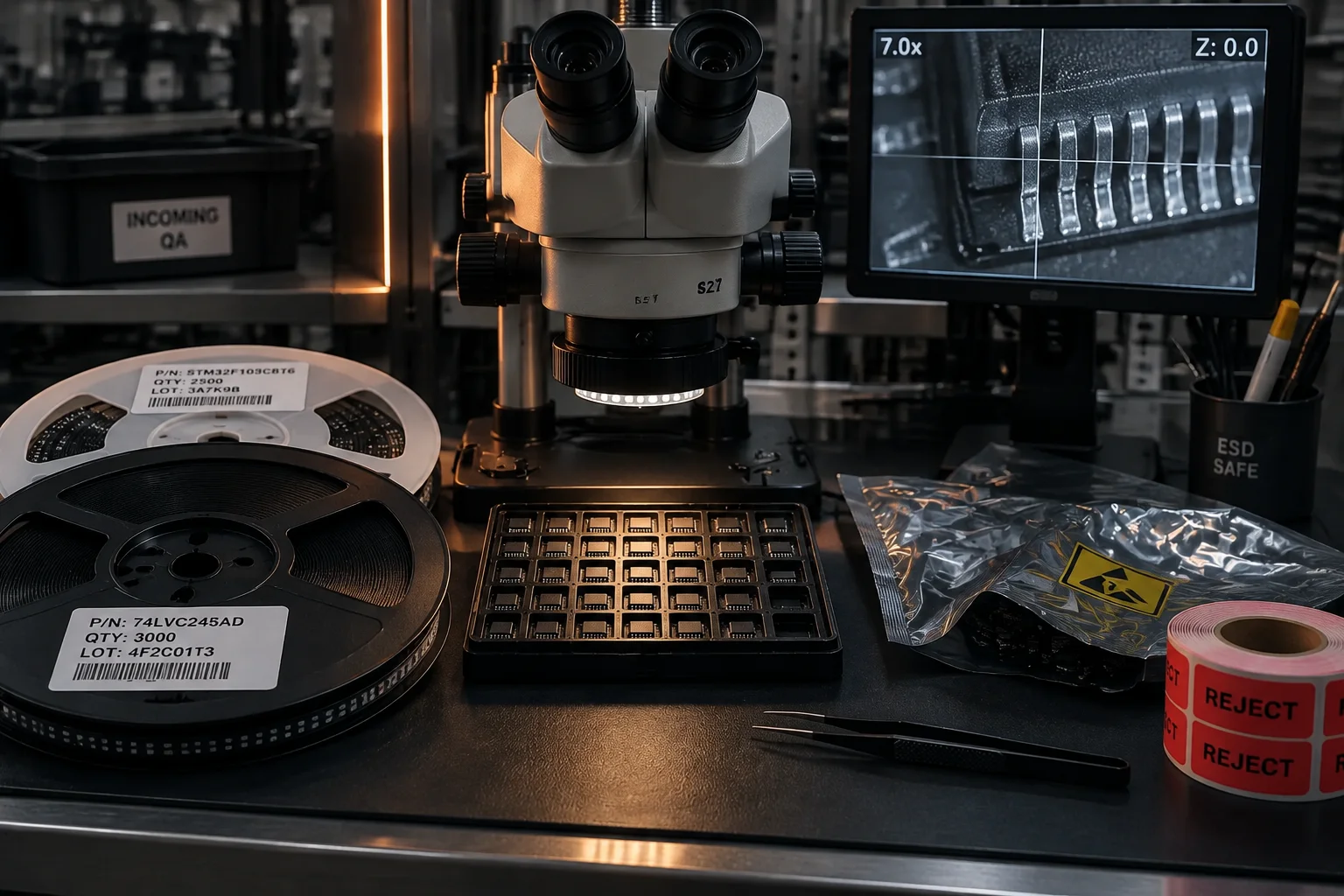
Component reels and loose parts under magnification on a sourcing bench, with date codes and labels being verified against a purchase record

Note 02 / Component sourcing

BOM sourcing risk: how counterfeits enter a build

A counterfeit rarely arrives as an obvious fake. It arrives as a recovered part with a fresh top mark, in a reel that looks correct, during a shortage that has already pushed the lead time past the customer's launch date. This note follows the routes a part takes into a build, the screening that catches each one, and the six lines on a bill of materials that carry most of the risk, including the date-code and traceability checks that a franchised purchase makes routine.

Read the note
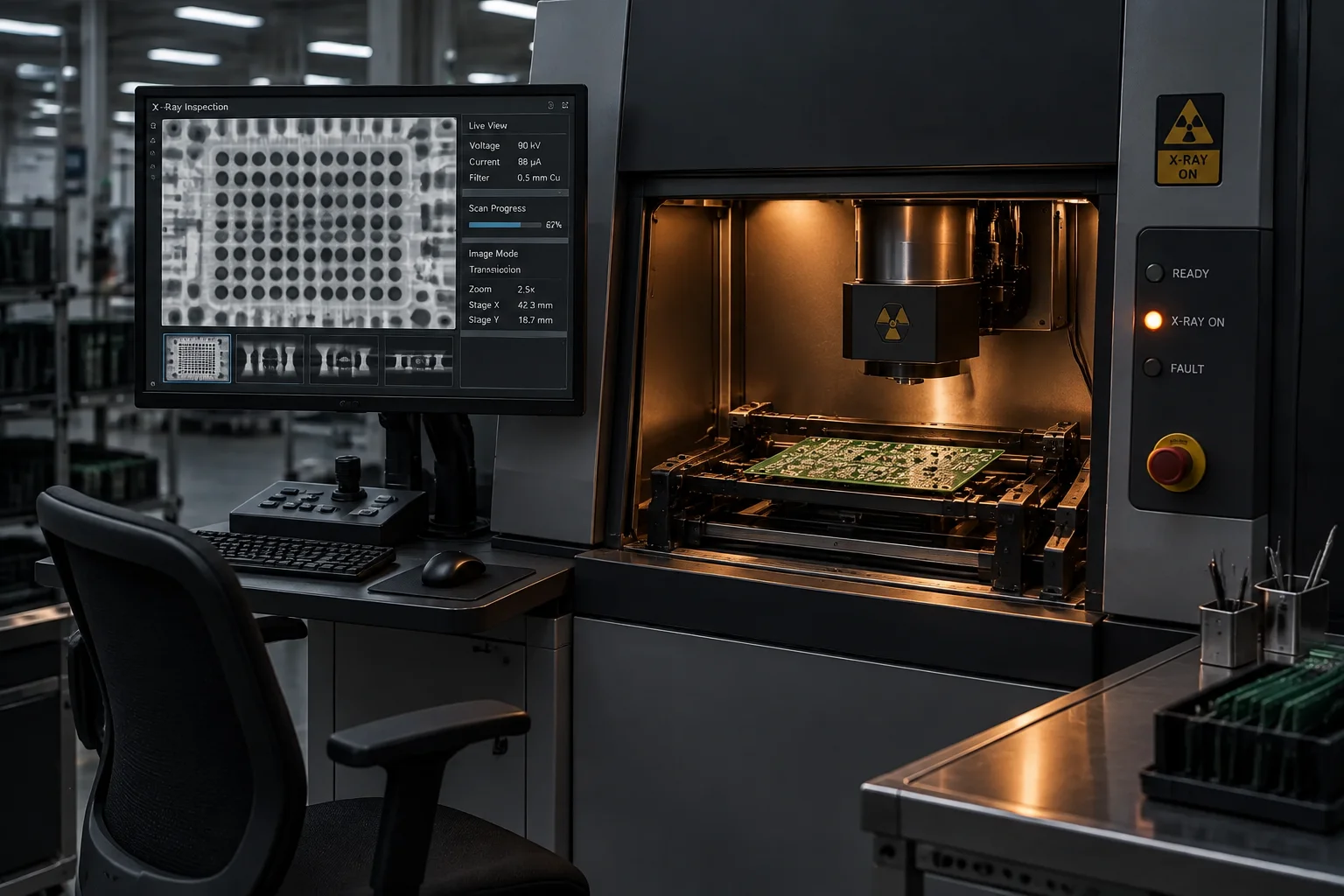
Inspection bench showing an optical inspection monitor beside an X-Ray image of hidden solder joints on the same assembly

Note 03 / Inspection

What AOI misses and what X-Ray cannot see

Two inspection methods are often treated as alternatives when they answer different questions. AOI sees the surface and cannot look under a package; X-Ray sees the joint and cannot see whether the circuit works. This note sets out the failure each method catches, the failure each one misses, and how to choose coverage from the escape risk of a specific board rather than from habit.

Read the note

Note index

What has been published, and what is being written

The index is maintained as a pipeline rather than a list of past posts, so a note that is in preparation can be requested and will be sent before it appears here.

Engineering note index - Penang programme desk
Note Sector Reading time Status
The NPI checklist that prevents a bad first build New product introduction 9 min Published
BOM sourcing risk: how counterfeits enter a build Component sourcing 7 min Published
What AOI misses and what X-Ray cannot see Inspection and test 8 min Published
Choosing a conformal coating for an outdoor enclosure Materials 6 min In preparation
Design rules that decide 01005 placement yield Design for manufacture 7 min In preparation
Thermal vias and heavy-copper stackups for power boards Power electronics 8 min In preparation
Planning test coverage by escape risk Test engineering 6 min In preparation
Reading an ionic contamination report Cleanliness 5 min In preparation

Editorial process

How a note gets written and kept current

Three steps, applied to every note on this page, which is why a note carries measured values rather than general advice.

Written from a live programme

The first draft comes from the engineer who ran the build, and it carries the programme reference, the board class and the measured values from the lot. Where a figure is an industry band rather than a result from this plant, the note says so in the sentence, because a buyer who later discovers the difference stops trusting the whole set.

Checked against the standard revision

A second engineer verifies every number against the standard revision cited and against the record it came from, which is typically a first-article report, an X-Ray void measurement against the 10% Class 3 limit or an ionic contamination result. If a claim cannot be supported by a record we can produce on request, it is removed rather than softened.

Revised in public, never quietly deleted

Each note carries the date it was last reviewed, and any note affected by a standard change is revisited within 30 days of the revision being published. The affected note is updated with a dated change line so a reader who cited the old value can see what moved and why. Notes are added to the index when they are written, which is why the five in preparation appear above without a link.

Get Quote Call Us
marker. Behaviour comes from inquiry-handler.js via data attributes — no inline JS, no onclick, no inline style (CSP: script-src 'self'; style-src 'self'). ============================================================================ --> marker. Behaviour comes from inquiry-handler.js via data attributes — no inline JS, no onclick, no inline style (CSP: script-src 'self'; style-src 'self'). ============================================================================ --> marker. Behaviour comes from inquiry-handler.js via data attributes — no inline JS, no onclick, no inline style (CSP: script-src 'self'; style-src 'self'). ============================================================================ -->