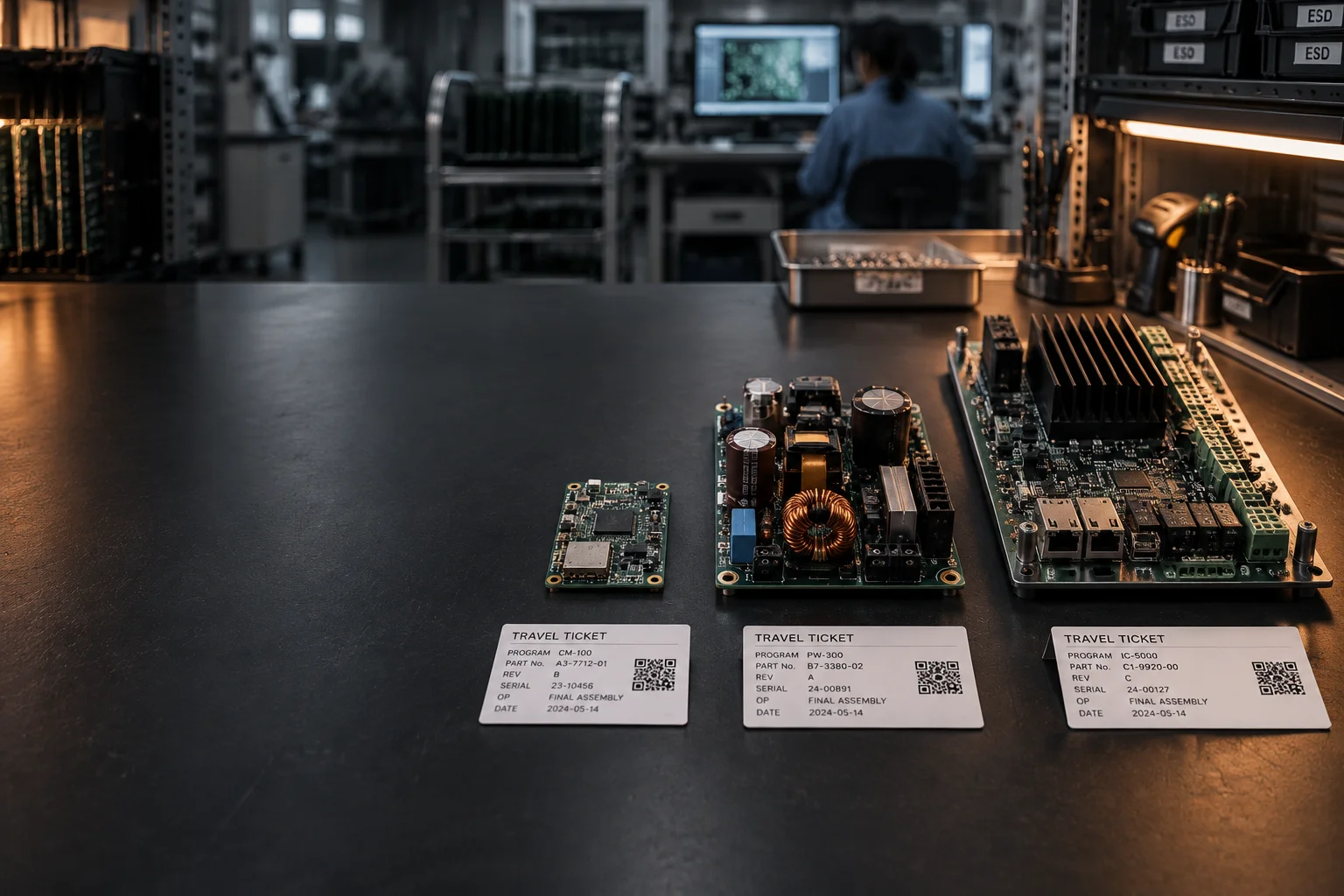
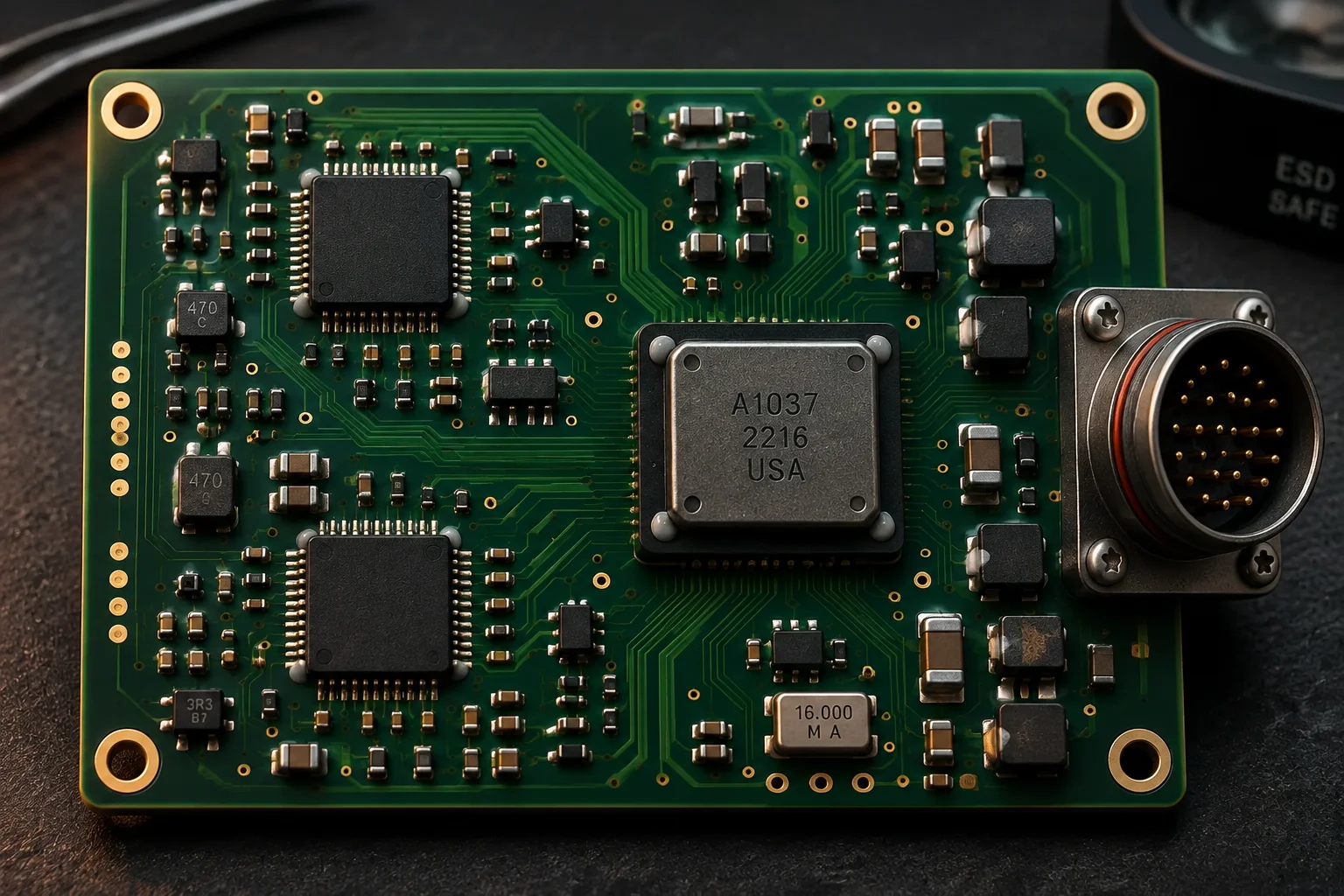
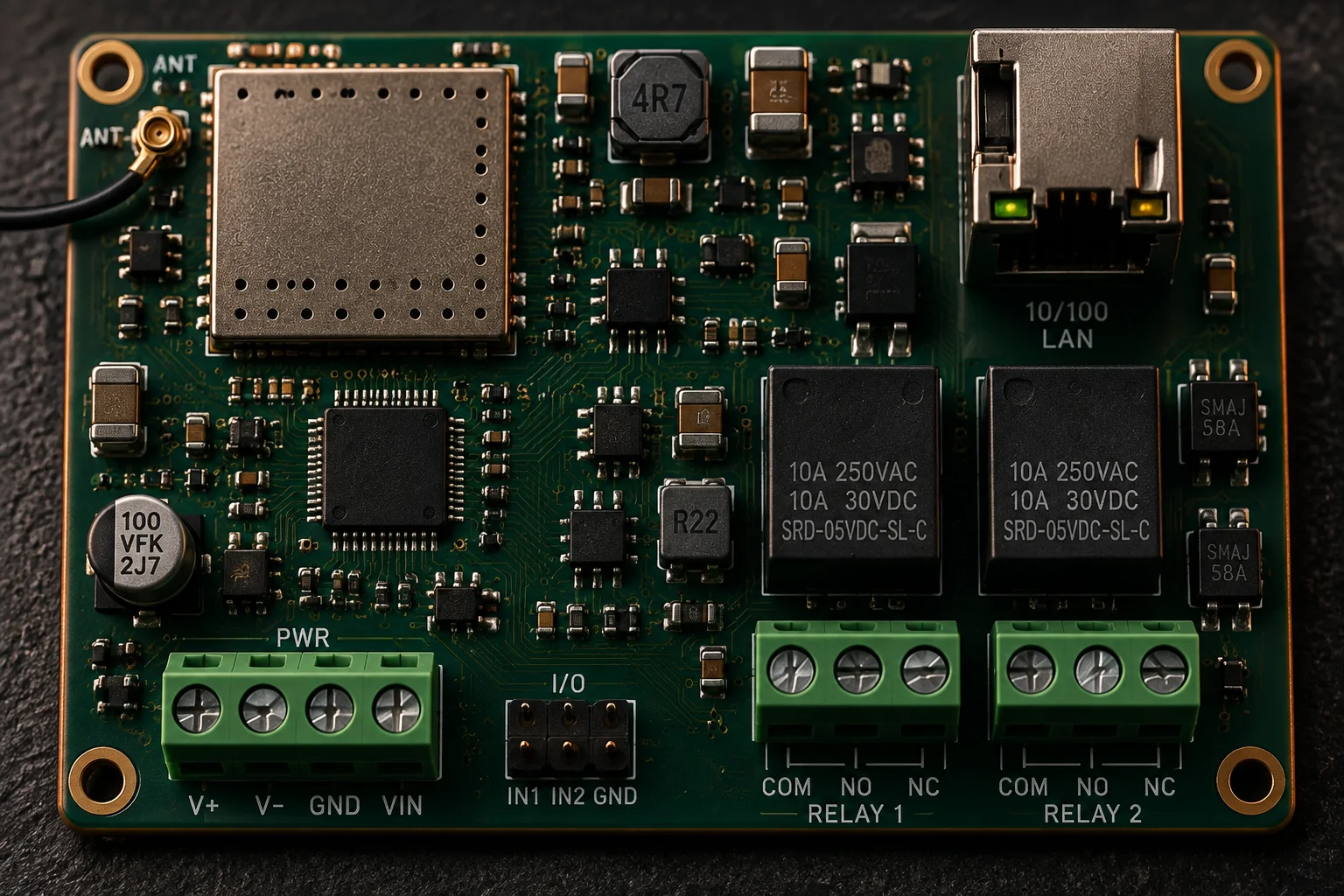
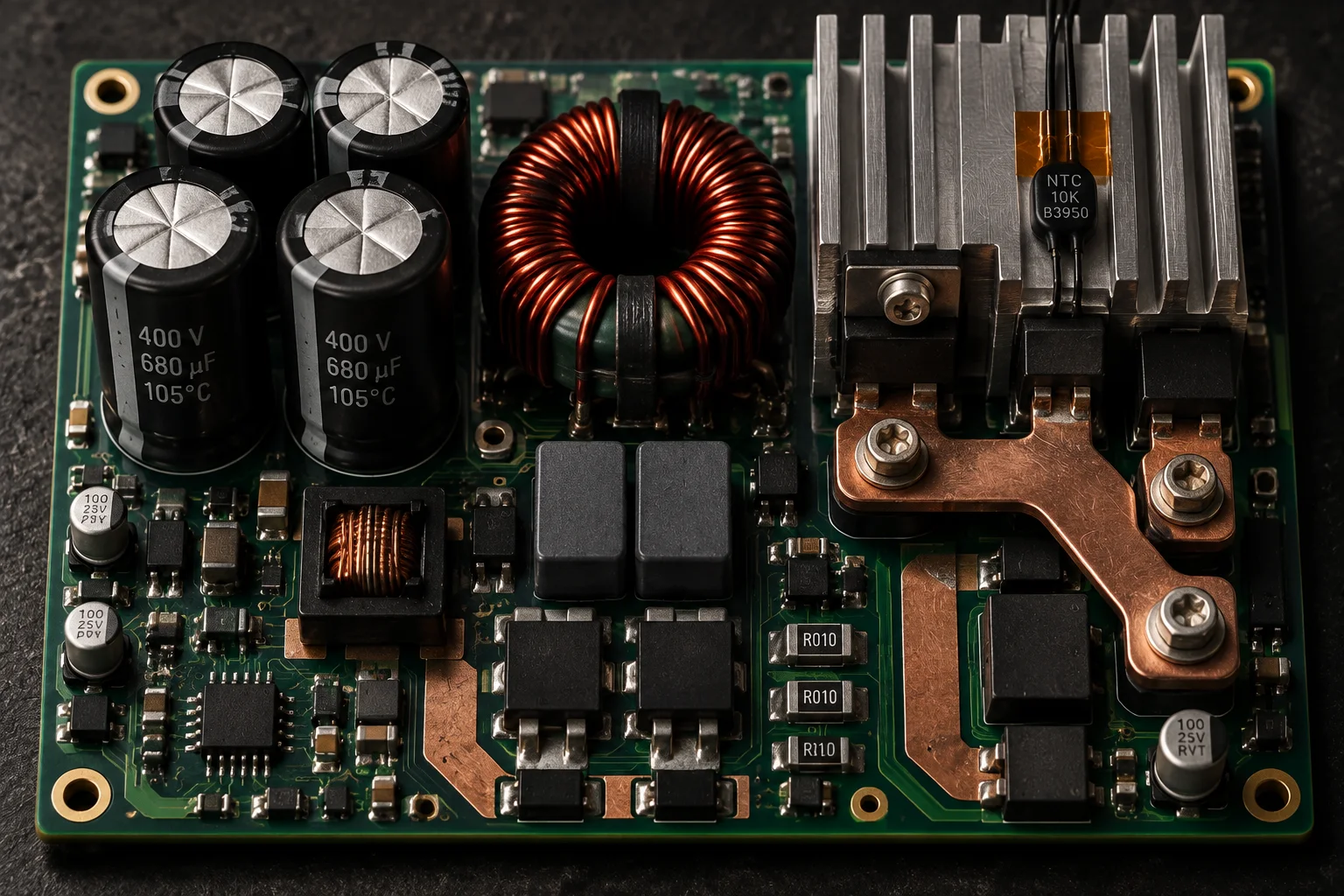
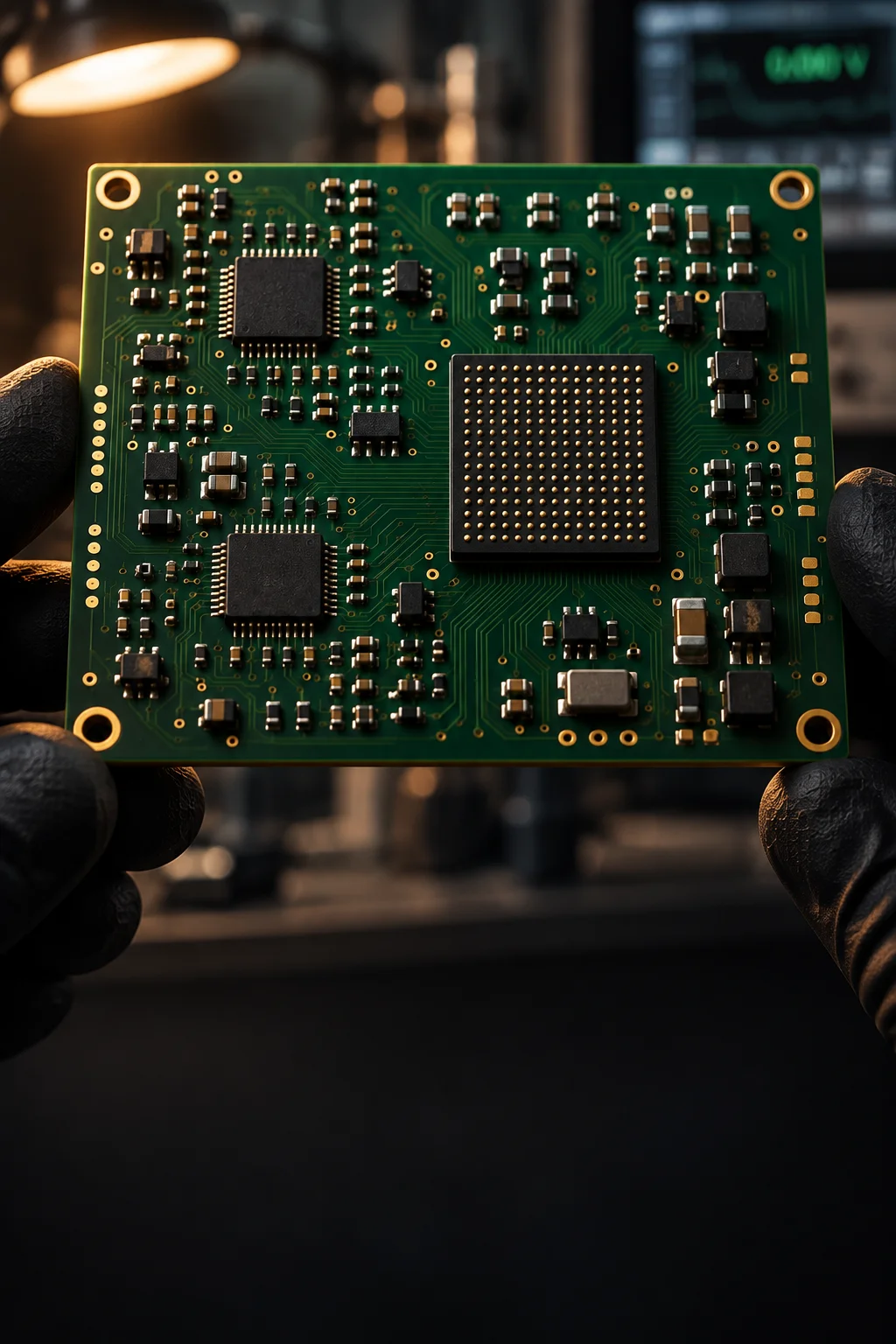
Close view of a populated control board with fine-pitch packages, a shielded radio section and copper power traces under side light

Programme examples / Bayan Lepas, Penang

Programme Examples

Six records from programmes that have run through this shop floor. Names, drawings and part numbers stay out: what is published is the sector, the requirement as it was written, the process plan we built, and the result the customer measured. Where a figure is an industry band rather than a measured value, the row says so.

Capability Envelope

99.4% first-pass yield across the last four quarters - 98.1% on-time delivery in 2025 - 0.06% field return rate - IPC-A-610 Class 2 and Class 3 in the same hall

Programme records

Six engagements, each written down as sector, requirement, build and result

Every record below is a programme number rather than a customer name, and every result line carries a measured number. The four programmes from 2024 have completed a full year in the field; the two from 2025 are still in their first production year.

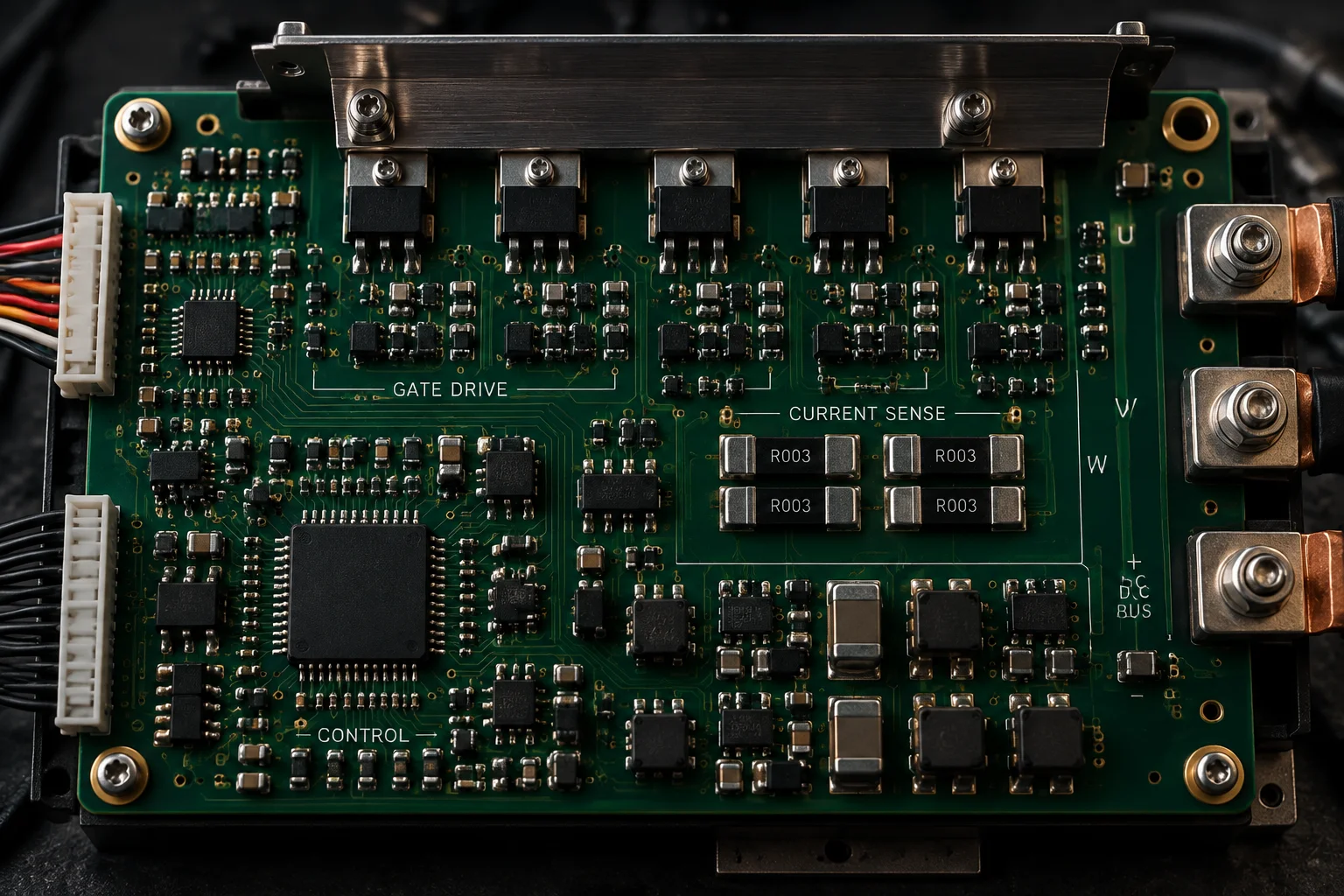
Industrial drive controller board with heavy copper power stage, wide isolation slots and a dense surface mount control section

PRG-2401

Industrial drive controller, six layers

Sector
Industrial automation
Requirement
Six-layer control board, 0402 passives, 1,200 units a year, continuous duty at 85 C with a 12-year field-life target and no mid-programme redesign budget.
What we built
Wave and selective soldering split into two routes, a locked laminate and finish specification, and a yearly last-time-buy review agreed with the customer's component engineering team.
Result
99.1% first-pass yield over 4,800 boards, 0.44% DPMO, field return rate 0.07%, 16 dated deliveries from 17 promised.
Diagnostic instrument board with a wide creepage channel across the mains barrier beside serialised laser marking

PRG-2402

Diagnostic analyser under ISO 13485

Sector
Medical devices
Requirement
Eight-layer mains-powered analyser, IEC 60601-1 2xMOPP isolation, Class 3 workmanship, and a device history record assembled per serial number for the regulatory file.
What we built
High-CTI halogen-free laminate with the material group locked in the traveller, 100% hipot at 4000 V AC, mandatory X-Ray on two QFN devices and per-serial record indexing.
Result
9,000 boards a year, barrier clearance 5.2 mm against 5.0 mm required, creepage 8.4 mm against 8.0 mm, BGA void worst case 6.1% against the 10% limit.
Automotive power module with thermal via arrays, a staked shield frame and heavy copper busbars

PRG-2403

EV charger power stage, AEC-Q parts

Sector
Automotive and EV
Requirement
AEC-Q100 and AEC-Q101 parts only, an IST and thermal-cycling evidence file, PPAP level 3 submission, and 15-year record retention for every lot shipped.
What we built
Grade 1 part sourcing with distributor traceability held per reel, a bonded heat-spreader process, current-carrying joints checked by cross-section, and a PPAP pack maintained per part revision.
Result
1,300 units a month, first-pass yield 98.7%, IST 1,000 cycles with no via barrel crack, zero part substitutions since the qualification build in March 2024.
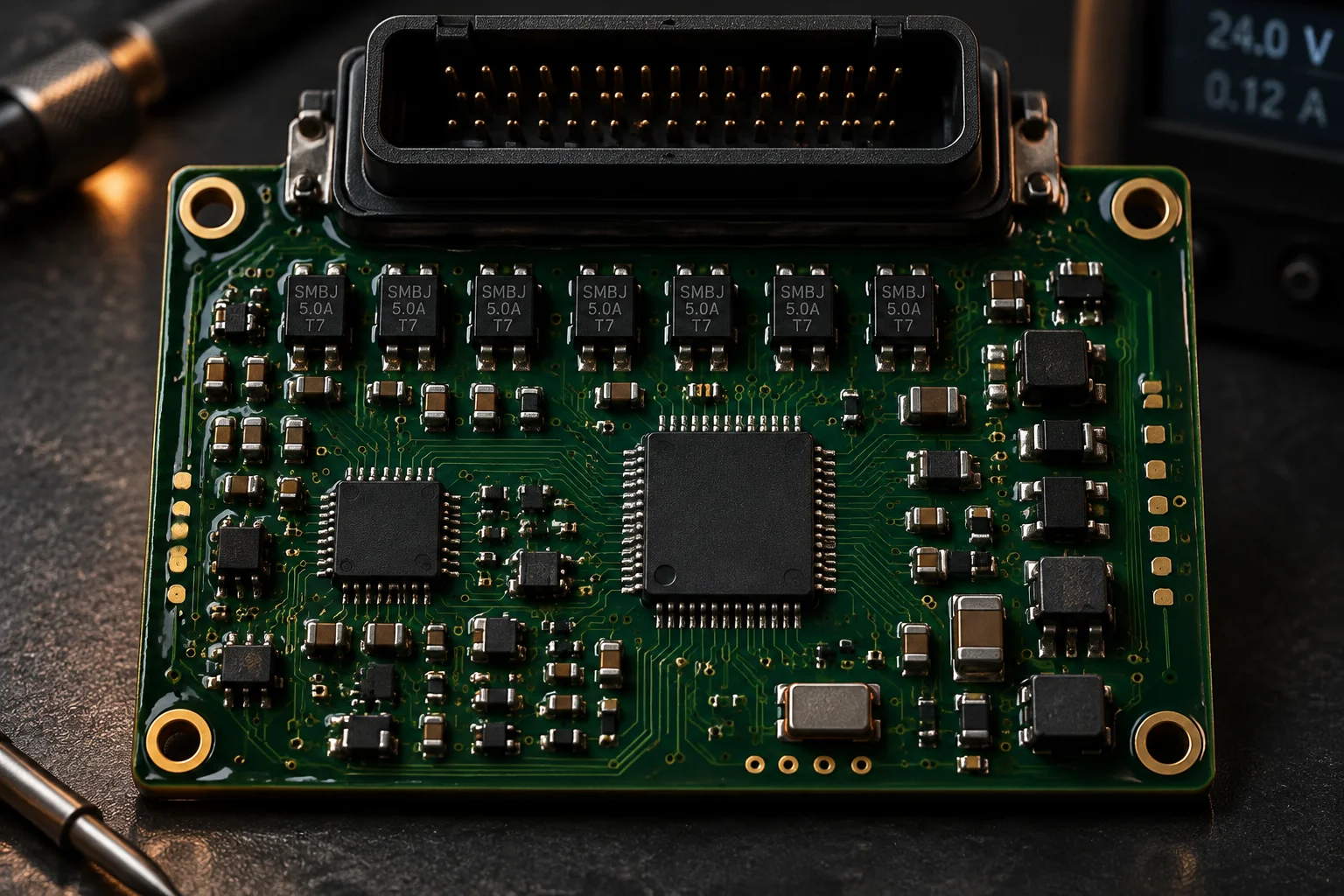
Ruggedised avionics controller with staked connectors, conformal coated circuitry and a milled aluminium frame

PRG-2404

Avionics controller built to Class 3

Sector
Aerospace and defence
Requirement
IPC-A-610 Class 3 with AS9102 first-article inspection, controlled handling of export-restricted data, and a counterfeiting-avoidance route for long-lead semiconductors.
What we built
Authorised-distribution-only purchasing with microscopy and XRF on every new lot, a segregated Class 3 line, staking and conformal coating, and a first-article report per drawing revision.
Result
620 units a year, first-pass yield 98.2% against the 8-15% Class 3 rejection band, ionic contamination 0.51 ug NaCl/cm2 against the 0.78 limit, zero counterfeit findings in 18 months.
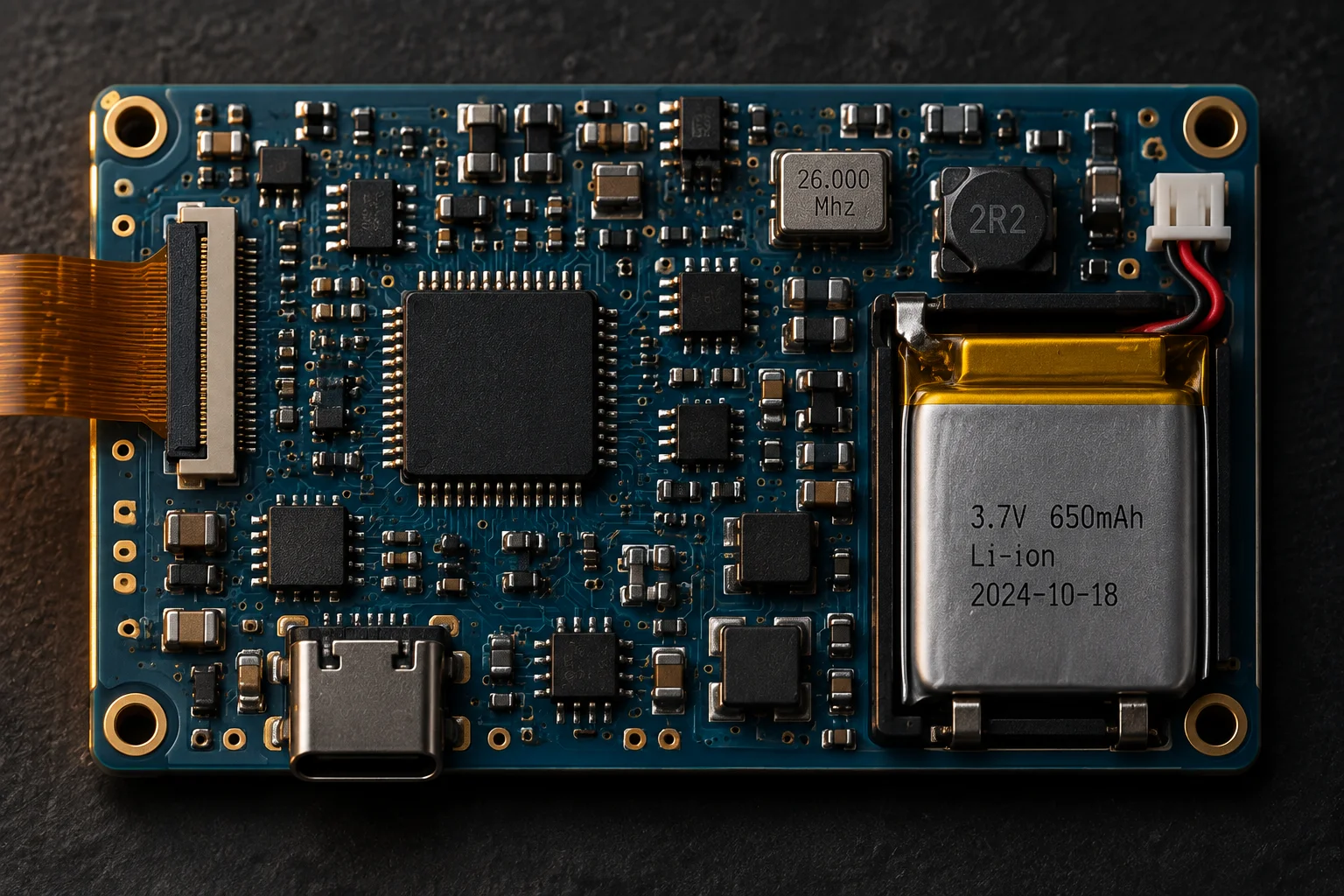
Compact IoT sensor node with a shielded radio section, a chip antenna and dense 0201 passives on a small panel

PRG-2505

IoT sensor node at seasonal volume

Sector
Consumer and IoT
Requirement
A 38 x 24 mm four-layer node at a landed assembly cost under 1.40 USD, FCC Part 15 and CE evidence, and a ramp from 2,000 to 48,000 units inside one quarter.
What we built
Panel re-layout from two-up to six-up, an assembly cost review that removed 31 placements, pre-compliance build support, and a fungible second source for the radio module.
Result
48,000 units in the ramp quarter, landed cost 1.22 USD, panel utilisation up 21%, on-time delivery 97.8% through the peak weeks and a 0.04% field return rate.
Energy gateway assembly with a high-current terminal block, wide creepage slots and a coated measurement section

PRG-2506

Energy gateway with a box build

Sector
Energy and power
Requirement
A metering gateway the customer had been buying as a bare board, a DIN enclosure and a cable set from three suppliers, with a 1,400-unit annual demand and a 22-minute final assembly target.
What we built
Board, harness and enclosure consolidated into one work order, hipot at 2500 V AC on the finished unit, a functional test fixture covering metering accuracy, and unit-level serialisation.
Result
Panel plus box build at a 16.4-minute cycle, 1,200 units shipped, rework rate 1.1%, freight cost per unit down 34% against the three-supplier route.
Presence-sensing radar module on a profiled antenna section, with the shield can removed and an impedance test coupon alongside

Featured programme / PRG-2507

A radar module rescued from a single-source allocation

This one is included because the failure had nothing to do with soldering. The customer's design was sound and the first three builds were clean; what put the programme at risk was an antenna-adjacent component on allocation with a lead time that moved from 12 to 46 weeks inside one quarter.

The constraint

A 24 GHz presence-sensing module for building automation, six layers on FR-4 with a profiled antenna section, an impedance tolerance of plus or minus 8% on two controlled lines, and 11,000 units a year released against demand windows rather than a smooth schedule. Packaging was 0201 passives and two 6 x 6 mm QFN devices under a removable shield can.

The plan and the outcome

We re-panellised from two-up to four-up on 1.0 mm FR-4, qualified and documented a second source for the allocated part rather than substituting silently, X-Rayed both QFNs on every board, and moved the antenna section through an impedance-verified route with a coupon measured per lot. A finished-goods buffer was set for the three customer demand windows. Across five production lots the first-pass yield has held at 95.2%, panel utilisation is 26% higher than the original two-up layout, and on-time delivery stands at 98.6%. No board has shipped on the second source without the customer's written approval and a documented validation build.

Featured programme detail - PRG-2507
Stackup 6 layers, FR-4, 1.0 mm finished thickness, ENIG finish
Panel 4-up, 220 x 160 mm usable area, 1.6 mm breakaway rails
Placements 412 per board, 0201 passives, two 6 x 6 mm QFN
Reflow peak 243 C, SAC305, soak profile on a 10-zone convection oven
Inspection 100% AOI, X-Ray on both QFNs and on the shield-frame perimeter
Electrical test Flying probe on the pilot, functional test with RF power measurement in volume
Release volume 11,000 units a year in three demand windows
Bring-up 12 working days from data release to first article

Programme parameters

The envelope the six records above were built inside

Each row states the range this facility quotes against and the evidence that comes with it, so a programme can be placed against the envelope before the first file is sent.

Programme parameter envelope - Bayan Lepas, Penang
Parameter Range quoted Evidence released with the build
Board technology Rigid FR-4, high-Tg and high-CTI laminates, metal-core and rigid-flex where the design calls for it; 1 to 32 layers on the incoming bare board Laminate certificate naming the grade, material group and lot
Board geometry 0.4 to 4.0 mm thickness; up to 510 x 460 mm panel envelope Panel drawing and the as-built panel utilisation figure
Component range 01005 and 0201 chip components, 0.35 mm leadless and 0.4 mm leaded pitch, micro-BGA, press-fit and heavy through-hole Placement accuracy report at plus or minus 15 to 25 um on fine pitch
Prototype quantity One panel, zero MOQ, 3 to 5 working days for a simple two-layer build and 5 to 10 days where the assembly is dense First-article report with the inspection record and the reflow profile used
Volume release From one panel upward; typical volume production lead time 3 to 6 weeks after material release Yield data per lot and the as-shipped configuration record
Test strategy Chosen per programme from AOI, X-Ray, in-circuit test, flying probe and functional test against escape risk and annual volume Test coverage statement naming every defect class the strategy catches
ICT fixture 2,000 to 50,000 USD with a 4 to 8 week lead time; functional fixtures 1,000 to 10,000 USD in 1 to 2 weeks Fixture drawing, GRR summary and the program revision loaded
Inspection 100% AOI on every SMT build and X-Ray on every BGA and QFN; Class 3 work adds a 20 to 40% premium over Class 2 X-Ray images retained per serial number where the programme is serialised
Certification class IPC-A-610 Class 2 and Class 3 to J-STD-001; ISO 9001:2015 and ISO 13485:2016 registered, audited against IATF 16949 and AS9100D Certificate of conformance naming the standard and class built to
Commercial frame NRE 150 to 500 USD per order; 50% on order and 50% on shipment for a new programme, net-30 after three completed orders Unit price held for 30 days with the Incoterm named on the quotation

Programme evidence

What the records above actually demonstrate

Each statement below is one the shop floor can be held to on the next programme, not a general claim about the plant.

Yield stated on the same definition every time

First-pass yield is counted after X-Ray and functional test, so a board that passes AOI and then fails a test is counted as a fail. Across the last four quarters that figure is 99.4%, with 0.42% DPMO on SMT placements measured over 4.1 million opportunities.

Defects found before shipment, not after

100% AOI on every SMT build and X-Ray on every BGA and QFN is where bridging, tombstoning, polarity and void defects are meant to stop. The number that proves it worked is the 0.06% field return rate, because an escape reaching a customer costs a containment exercise rather than a rework hour.

Delivery dates counted from the promise

On-time delivery is measured against the date printed on the order acknowledgement rather than a date later agreed on a call, and it stands at 98.1% for 2025. 42 programmes are active at any one time across 6 SMT and 3 DIP lines, which is the loading that figure is produced under.

Buyer questions

What a programme record does and does not tell you

Get Quote Call Us
marker. Behaviour comes from inquiry-handler.js via data attributes — no inline JS, no onclick, no inline style (CSP: script-src 'self'; style-src 'self'). ============================================================================ --> marker. Behaviour comes from inquiry-handler.js via data attributes — no inline JS, no onclick, no inline style (CSP: script-src 'self'; style-src 'self'). ============================================================================ --> marker. Behaviour comes from inquiry-handler.js via data attributes — no inline JS, no onclick, no inline style (CSP: script-src 'self'; style-src 'self'). ============================================================================ -->