KIT-01 / Cables
Accessory cables
Mains, signal and programming cables, each tested for continuity and packaged separately so a 0.5 m and a 2 m variant can never be mixed in one carton.
Box build / system integration
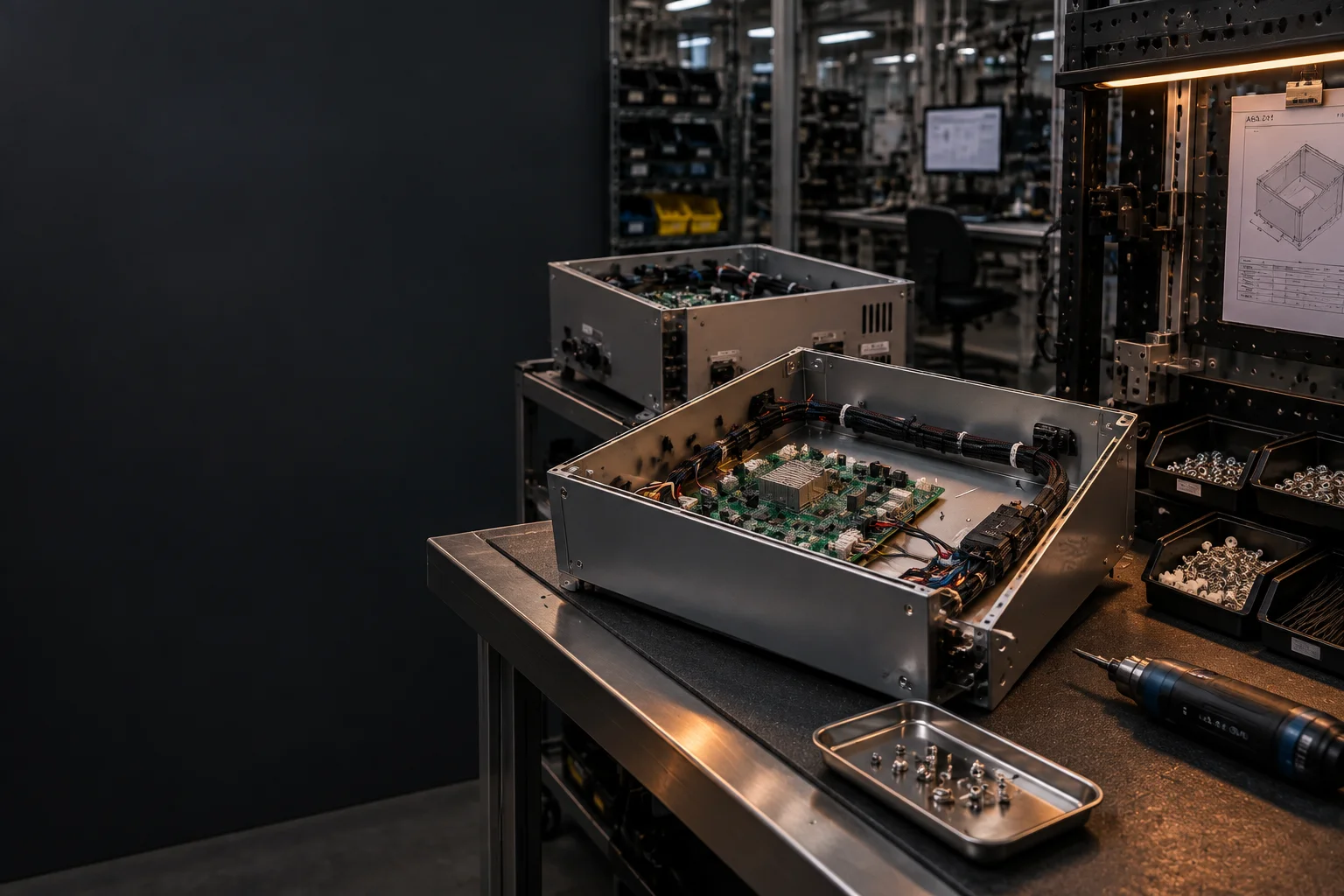
A tested board is not yet a product. Box build covers everything from enclosure preparation and harness routing to torque-controlled fastening, labelling, system-level functional test and pack-out, so the unit that leaves Penang is the unit your customer unboxes.
Integration
Most field failures in an assembled unit are mechanical or connective, not electrical. Four controls decide whether they happen at all.
Assembly uses torque-controlled drivers across a 0.4-4.0 Nm range, with the setting written on the work instruction and the result logged per fastener against the unit serial. A screw that is 20% under spec is a warranty claim six months later.
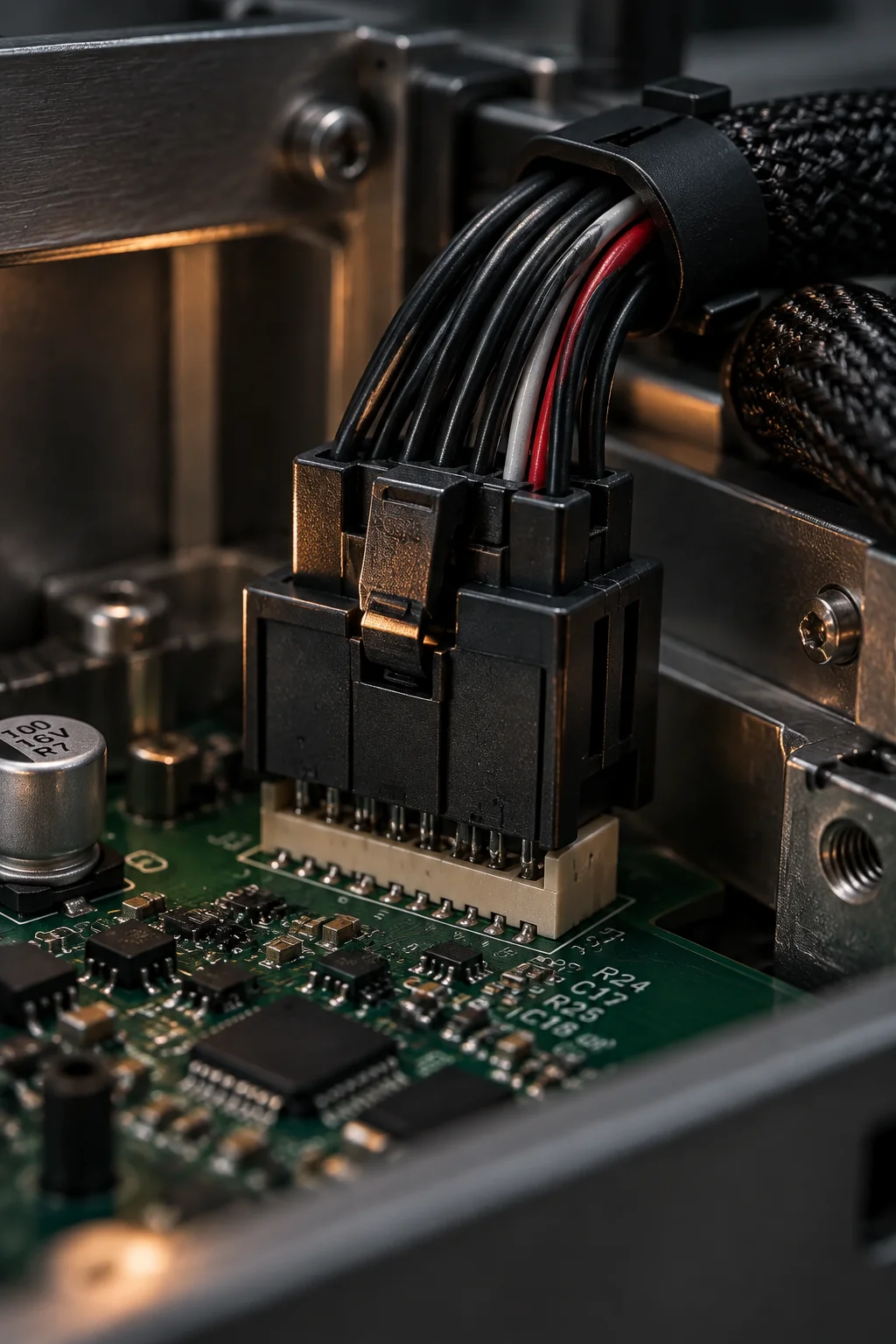
Crimp, IDC and soldered terminations follow IPC/WHMA-A-620, with strain relief where the cable exits the enclosure and a minimum bend radius of 4x the cable diameter. Routing paths are shown on the assembly drawing rather than left to the bench.
Thermal paste is applied at 0.05-0.15 mm bond line thickness or a pad is compressed to its rated deflection. Staking adhesive holds heavy parts against vibration and is cured on a recorded cycle before the unit is closed.
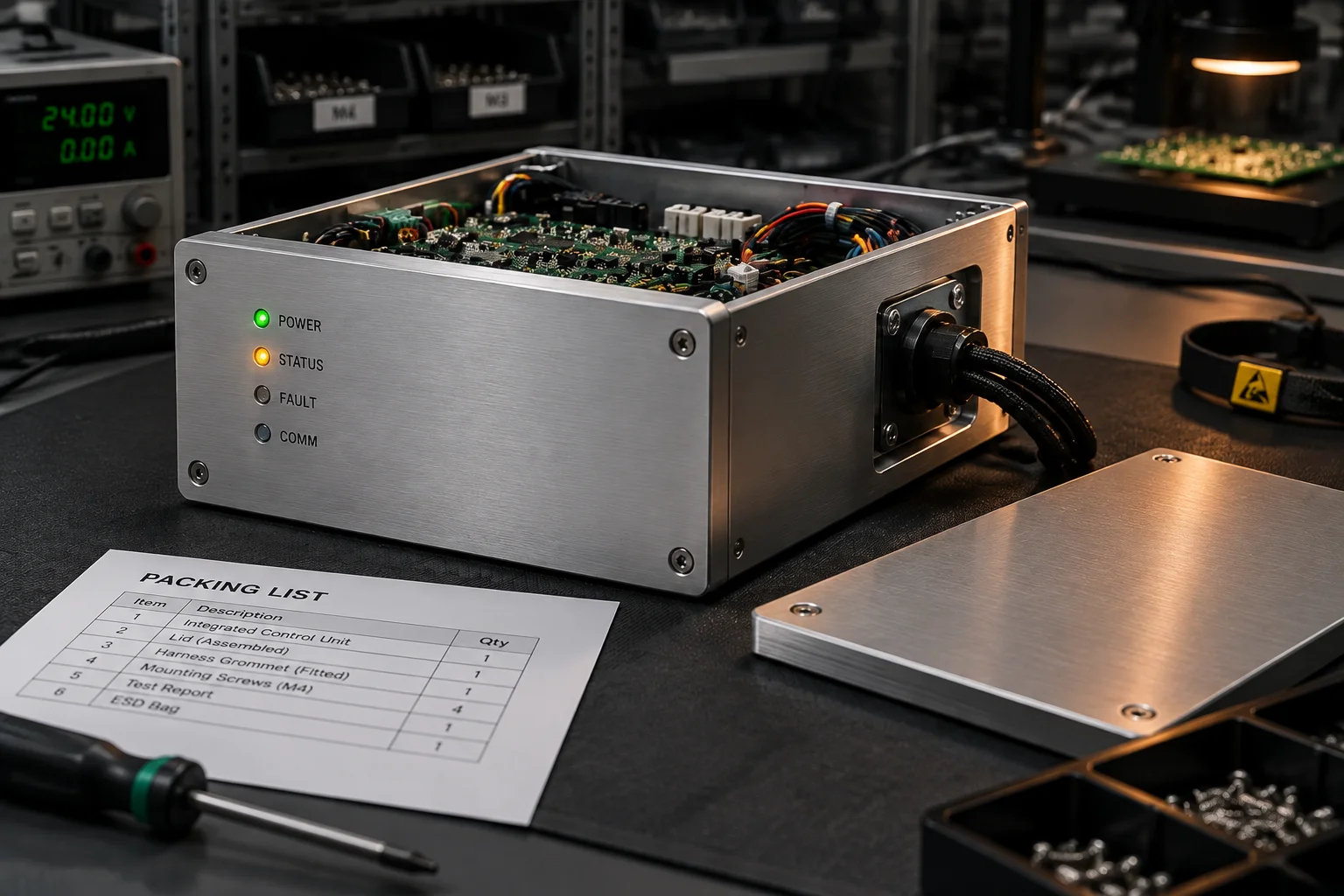
Every unit runs a system-level functional test after final assembly, taking 30 seconds to 5 minutes depending on the product. Board-level test cannot see a swapped connector, a pinched cable or a fan wired backwards.
Scope
Twelve scope items, quoted individually so a programme can start with the board and add mechanical steps as it scales.
| Scope item | What it covers | Evidence or limit |
|---|---|---|
| Enclosure preparation | Masking, grounding points, insert fitting and ESD-safe handling of painted and plated parts | Per-drawing check sheet |
| Sub-assembly | Brackets, heatsinks, displays and shielding cans fitted to the board before it enters the enclosure | Fastener list per drawing |
| Harness routing | Crimp, IDC and soldered terminations routed on a documented path with strain relief | IPC/WHMA-A-620 Class 2 or 3 |
| Fastening | Torque-controlled drivers across a 0.4-4.0 Nm range, with the setting on the work instruction | Torque logged per fastener |
| Staking and potting | UV or silicone adhesive for vibration resistance and environmental sealing of heavy parts | Cure cycle record |
| Thermal interface | Paste at 0.05-0.15 mm bond line thickness, or a gap pad compressed to rated deflection | Measured on first article |
| Labelling | Serial, date code and regulatory marks on the unit and the carton, including 2D data matrix | Laser-marked, read back at test |
| Firmware programming | Bootloader, application image and calibration constants written through the production interface | Checksum recorded per serial |
| System-level functional test | Full unit test after final assembly, covering the functions the customer will exercise | 100% of units, 30 s to 5 min each |
| Safety test | Dielectric withstand where the drawing requires it, at 4000 V AC for one minute | Hipot log per unit |
| Cleaning and bake | DI water cleaning for coated assemblies, bake and dry-pack for moisture-sensitive parts | MSL handling record |
| Pack-out | Shock, ESD and humidity packaging to the carton specification, with accessories kitted | Drop test per carton spec |
Shipped with the unit
Nine kit lines that are packed, counted and verified against the packing list before the carton is sealed.
KIT-01 / Cables
Mains, signal and programming cables, each tested for continuity and packaged separately so a 0.5 m and a 2 m variant can never be mixed in one carton.
KIT-02 / Hardware
Brackets, screws and wall plugs counted by weight against the bill of materials, with the fastener size printed on the bag so a field engineer does not have to guess.
KIT-03 / Connectors
Pluggable terminal blocks and mating halves supplied loose where the installation calls for field wiring, bagged by circuit position and marked with the voltage class.
KIT-04 / Spares
Spare fuses at the specified rating plus any consumable the service manual lists, so a commissioning fault is cleared on site instead of in a return shipment.
KIT-05 / Documentation
A printed quick-start card carrying the terminal assignments, the rated input range, the safety marks and the support contact used across the site.
KIT-06 / Certificate
A certificate of conformance referencing the serial, the revision, the functional test result and the standards the unit was built to, signed and dated per lot.
KIT-07 / Labels
Spare labels carrying the same 2D data matrix and serial as the unit, plus the regulatory marks applied at production, for re-labelling after field service.
KIT-08 / Firmware record
The checksum of the image written to the unit and the calibration constants applied at test, so a later service visit can confirm what the product left the factory with.
KIT-09 / Packaging
Desiccant and a humidity indicator card inside the barrier bag for units carrying moisture-sensitive assemblies, with the floor-life clock restarted from the documented bake date.
Integration services
Each is quoted separately, so a programme can add mechanical scope without renegotiating the board price.
SVC-01 / Mechanical
Enclosure preparation, insert fitting and board-level sub-assembly, including heatsink mounting with a controlled thermal interface and shield-can fitting after reflow.
SVC-02 / Interconnect
Crimp, IDC and soldered harnesses built to IPC/WHMA-A-620, routed on a documented path, with continuity and pull tests recorded before the unit is closed.
SVC-03 / Process
Torque-controlled assembly across 0.4-4.0 Nm, thread-locking where the drawing calls for it, and staking adhesive cured on a recorded cycle for parts exposed to vibration.
SVC-04 / Test
A test station built for the assembled product, covering the operator interface, every connector and the thermal behaviour at rated load, with results filed against the unit serial.
SVC-05 / Logistics
ESD-safe and shock-rated packing to the carton specification, carton-level drop testing, and shipment under EXW, FOB Penang, CIF, DAP or DDP with on-time delivery at 98.1%.
SVC-06 / Service
Disassembly, board-level rework under IPC-7711 and 7721, harness replacement and re-test, so a failed unit is returned to the field as a repaired unit with its records updated.
Macro record
Questions
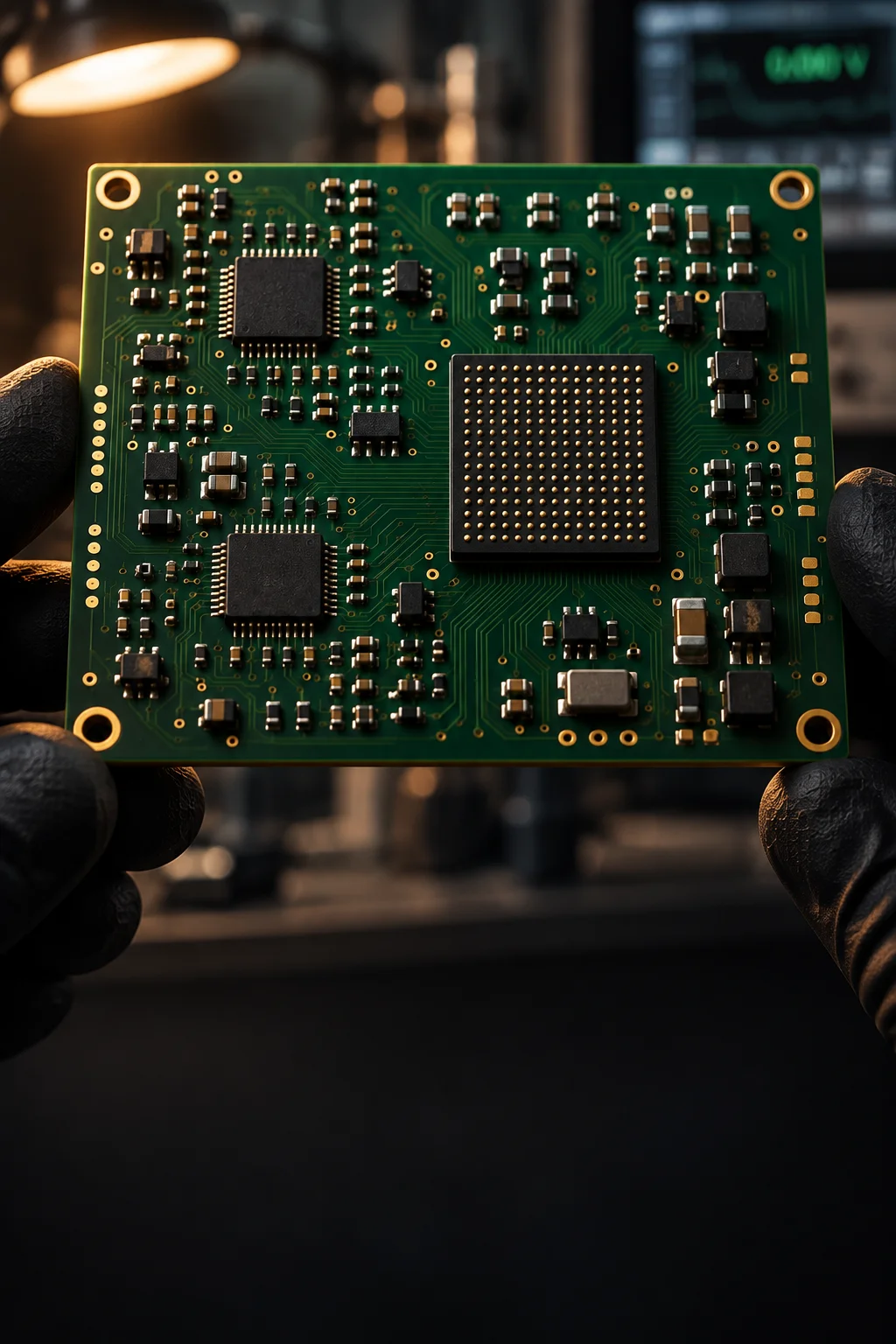
PCBA ends at a tested circuit board. A box build starts there and adds enclosure preparation, harness routing, torque-controlled fastening, staking, thermal interface material, labelling, firmware programming and system-level functional test, so the customer receives a unit rather than a board.
Both, and they catch different faults. Board-level test runs at 30 seconds to 5 minutes per board; system-level functional test runs again once the unit is closed, at 100% of units, which is the only way to catch a harness routed into the wrong connector.
Yes, with the shipping rules applied: UN38.3 test summaries held on file, state of charge set for transport, and terminals protected so a unit cannot short inside its own carton. Battery packs are stored outside the ESD production area.
Seven fields. A process engineer replies within one working day.
Seven fields. A process engineer replies within one working day.
Seven fields. A process engineer replies within one working day.